The leak has to be fixed before we touch the stain
Painting over a stain while water is still getting in is wasted money. The ring will come back, often larger, and wet drywall can grow mold behind the new paint. Before we schedule, we ask what caused the stain and whether it's been repaired: a roof leak after a hailstorm, a slow drip from a bathroom supply line, a clogged AC condensate drain in the attic, or a failed seal around a vent pipe.
We aren't roofers or plumbers, so we don't repair the leak itself. If you're not sure the source is fixed, we can point out what we see, such as a stain directly under an attic AC unit or one that spreads after rain, so you can call the right trade first. Once the repair is done, we come out and handle the ceiling. That order keeps you from paying for the ceiling twice.
Checking that the ceiling is truly dry
A ceiling can feel dry and still hold moisture inside the gypsum. We check with a pinless moisture meter across the stain and the surrounding area, comparing readings against a dry section of the same ceiling. If readings are high, we wait. Primer and paint over damp drywall can blister, peel or let the stain bleed back through within weeks. We note the readings so you have a record of when the ceiling was dry.
Drying time depends on how much water came through. A small drip stain might be ready in a few days with the attic ventilated. A larger soak from a burst line may need fans or professional drying equipment, and we may suggest opening a section to let air reach the wet framing and insulation. If we see signs of mold, we'll point them out so you can have them assessed before any repair.
What ceiling water stain repair typically costs in Fort Worth
$235 to $1,180
from sealing and repainting one stained ceiling to replacing a damaged drywall section and repainting the room's ceiling. Your price comes from a written scope after we see the job.
What moves the number
- Size and number of stains
- Whether drywall is sagging or soft and must be replaced
- Ceiling texture to match after repair
- Repainting the full ceiling versus a section
- Ceiling height and stairwell access
- Color matching an older or tinted ceiling paint
Why ordinary paint can't cover a water stain
Water carries minerals and tannins from roof decking, insulation and the back of the drywall. When it dries, those particles stay in the surface as a brown or yellow ring. Latex paint is water-based, so it re-dissolves those stains and pulls them back up through the new coat. That's why a stain often reappears after one or two coats of regular ceiling paint. Stain-blocking primer is the step most quick touch-ups skip.
We seal stains with a shellac-based or oil-based stain-blocking primer, which doesn't let the discoloration migrate. Shellac-based primer dries fast and blocks severe stains well; oil-based blockers work for most typical rings. We usually prime a margin past the visible edge, since water spreads further than it shows. Shellac primer gives off strong fumes while wet, so we open windows and run fans, and it's dry enough to topcoat within about an hour. Oil-based blockers take longer, usually several hours, and we plan the paint coats around that.
- Shellac-based primer: strongest stain blocking, fast dry
- Oil-based stain blocker: reliable for typical water rings
- Spot prime past the visible edge of the stain
- Two coats of flat ceiling paint over the full ceiling
When the drywall needs to be replaced, not just painted
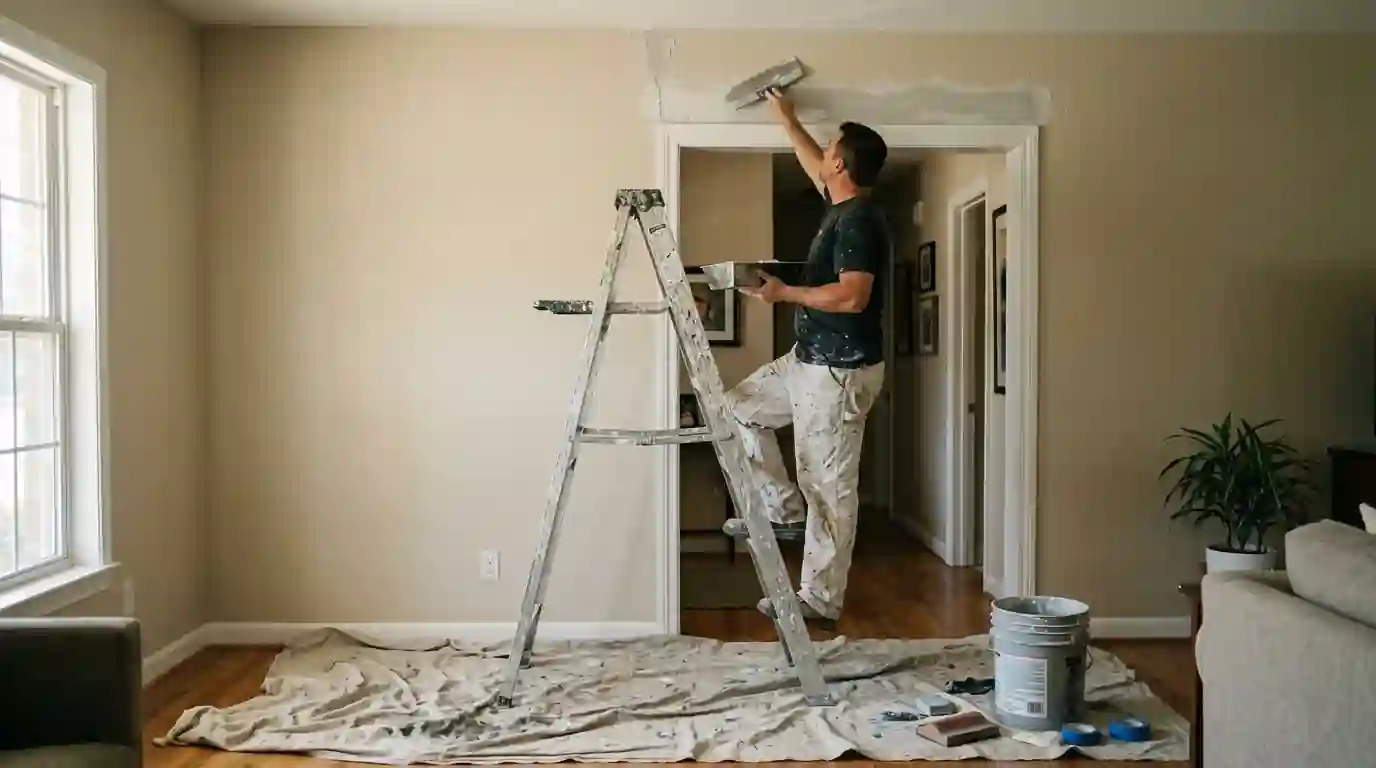
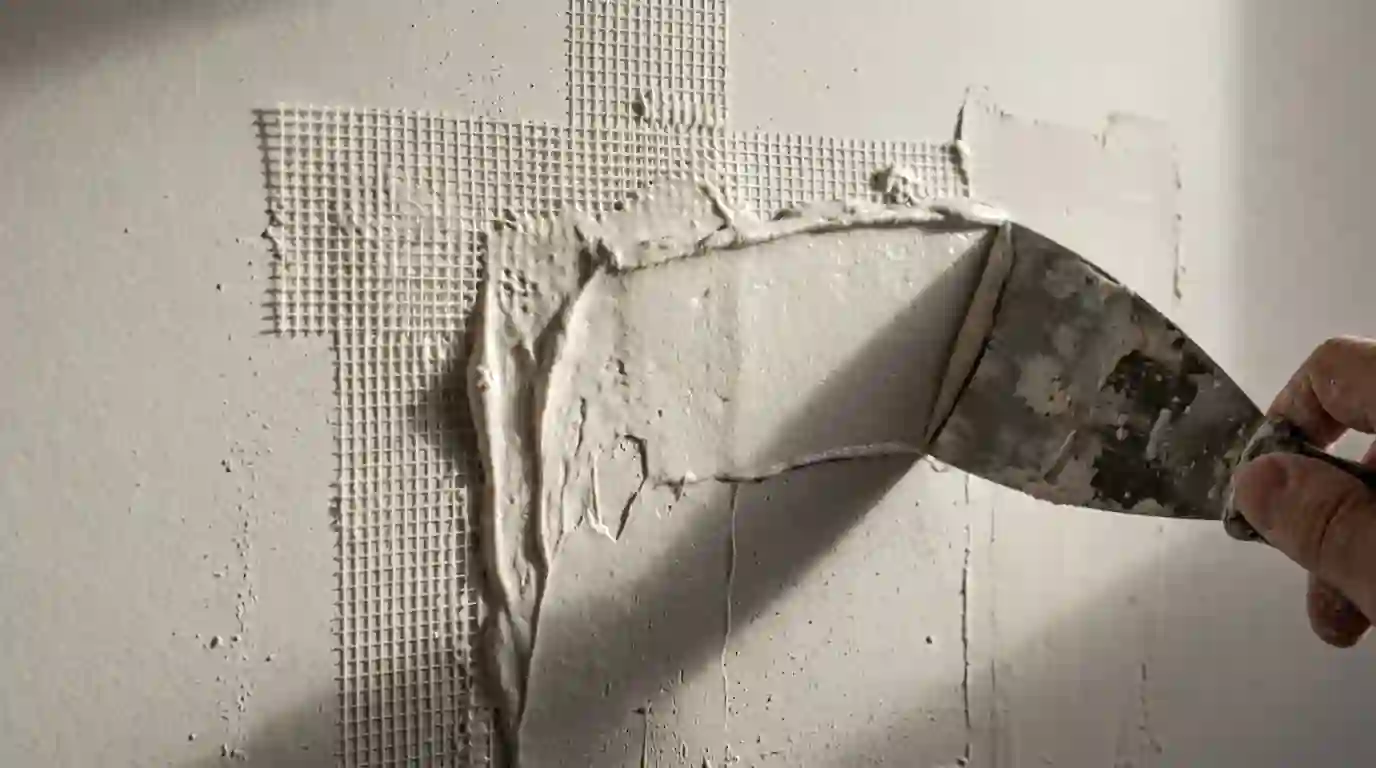
Stains on firm, flat drywall usually only need sealing and paint. But ceilings that sag, feel soft when pressed lightly, show cracked or loose tape seams, or have crumbling paper need the damaged section cut out. We cut back to sound drywall, ideally between ceiling joists, add backing where needed, install new board, tape and mud the seams and match the ceiling texture. Wet insulation above the patch should be replaced too.
Popcorn texture needs special handling. If the stained ceiling is popcorn in an older home, it should be tested for asbestos before we cut, scrape or sand it. Many homeowners use a leak repair as the moment to remove the popcorn and update the whole ceiling, once test results confirm it's safe to disturb. Until the lab results come back clear, we leave the stained popcorn exactly as it is. A few days of waiting costs far less than spreading fibers through a house.
Signs it is time for ceiling water stain repair
- A yellow or brown ring on the ceiling after a heavy rain
- Stains below an attic AC unit, bathroom or upstairs laundry
- Ceiling drywall that sags, feels soft or has bubbling paint
- Stain that came back after you painted over it once
- Loose or cracked tape seams near a stained area
- Discoloration around light fixtures, vents or ceiling fans
How we handle ceiling water stain repair, step by step
- 1
Confirm the source is fixed
We ask what caused the leak and who repaired it. If we see signs the cause is still active, we stop and tell you, since painting first wastes your money.
- 2
Measure moisture
A moisture meter checks the stain and surrounding ceiling against a known dry area. We only move forward once the readings show the drywall has fully dried out.
- 3
Repair damaged drywall
Soft, sagging or crumbling sections get cut out back to solid board, new drywall goes in with backing, and seams are taped, mudded and sanded smooth.
- 4
Seal the stain
We apply a shellac-based or oil-based stain-blocking primer over the stain and a margin around it, adding a second coat when the stain is heavy.
- 5
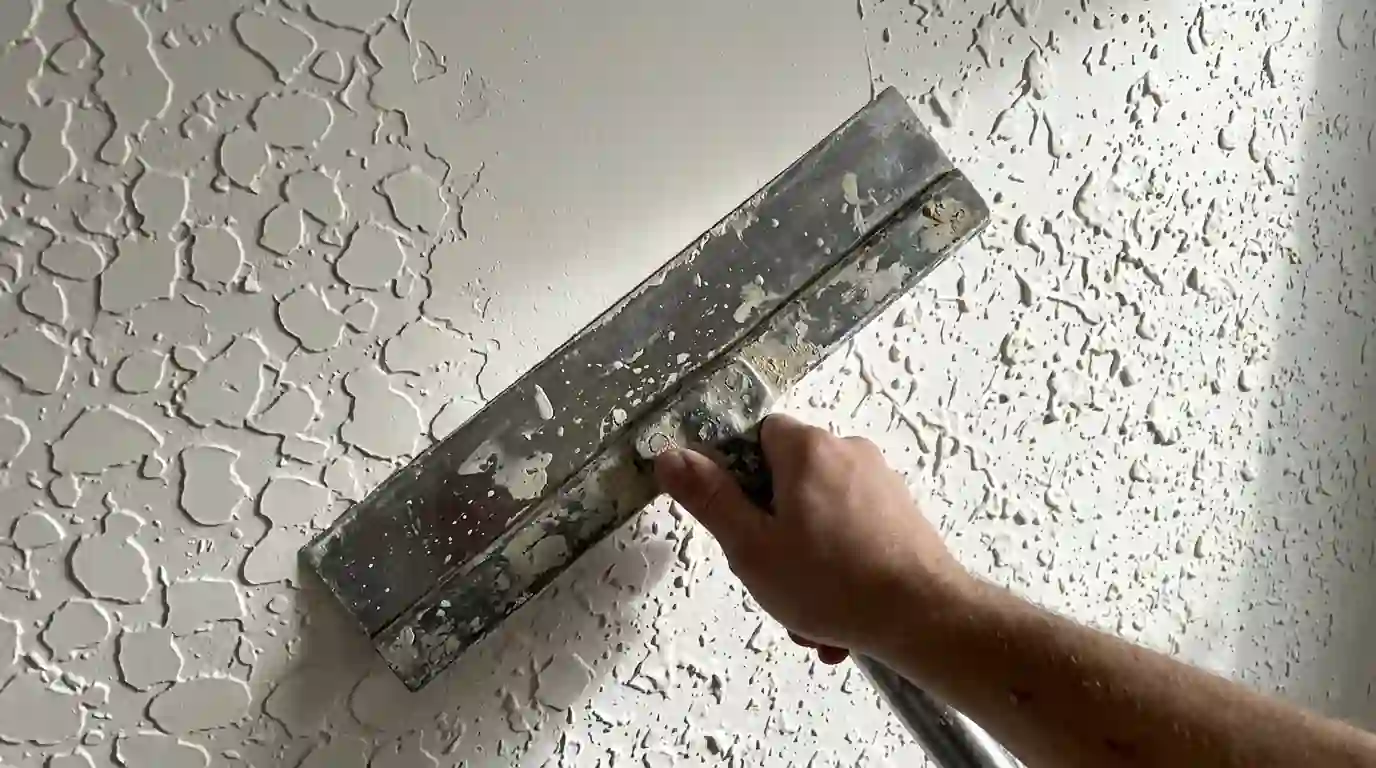
Match the texture
Repaired sections get texture that matches the existing ceiling, tested on scrap board first, so the patch doesn't stand out once the paint goes on.
- 6
Repaint the ceiling
Two coats of flat ceiling paint go over the full ceiling plane, so the color and sheen look uniform from one wall to the other.
Fort Worth conditions that shape ceiling water stain repair
Fort Worth ceiling stains tend to come from a few repeat sources. Spring hailstorms crack shingles and damage roof vents, letting water in during the next downpour. Attic air conditioning units, very common in North Texas homes, can overflow when condensate drains clog in summer, staining hallway and bedroom ceilings below. The February 2021 freeze burst many pipes in attics and walls, and some of those repairs still show up as stains in older paint. If an insurance claim is open for storm or plumbing damage, keep photos of the stain before we start and let your adjuster see it first. We can work with the repair timeline once the claim and the leak repair are settled.
Where we offer ceiling water stain repair around Fort Worth
Across Fort Worth (76102 and surrounding ZIP codes), including Fairmount, Ryan Place, Mistletoe Heights, Arlington Heights, Tanglewood, Westcliff and other neighborhoods, plus these nearby cities and counties:
- Arlington 76010
- Grand Prairie 75050
- North Richland Hills 76180
- Mansfield 76063
- Euless 76039
- Grapevine 76051
- Bedford 76021
- Keller 76248
- Burleson 76028
- Haltom City 76117
- Hurst 76053
- Southlake 76092
- Weatherford 76086
- Saginaw 76179
- Colleyville 76034
- Benbrook 76126
- Tarrant County 76102
- Denton County 76201
- Johnson County 76031
- Parker County 76086