What years of sun and sprinklers do to fence pickets
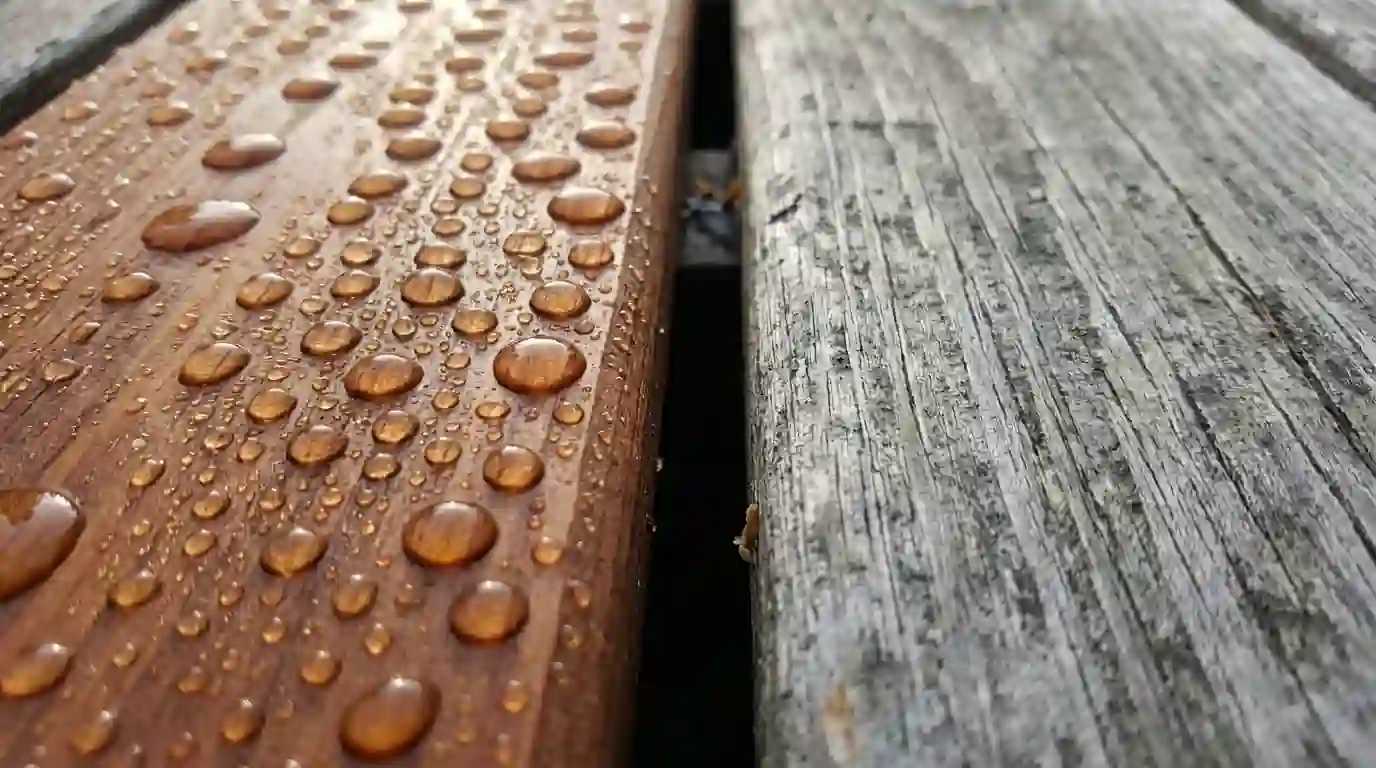
Unstained cedar and pine pickets go from honey-colored to silver-gray within a year or two in Fort Worth sun. That gray layer is UV-damaged wood fiber, and it's weaker and more absorbent than the wood underneath. As the pickets soak up rain and sprinkler water and then dry out in the heat, they cup, twist and split at the nail holes. Bottom edges near the ground stay damp longest and start to rot first, especially where mulch or soil is piled against the fence.
Stain slows all of that down. It limits how much water the pickets absorb, so they move less, and it blocks much of the UV that breaks down wood fibers. A stained fence keeps its shape and color longer, and boards don't need replacing as often. That's why staining even a newer fence early usually saves money compared with replacing curled pickets later. It also keeps the bottom few inches of each picket drier, which is where fences fail first.
Cleaning and brightening weathered cedar and pine
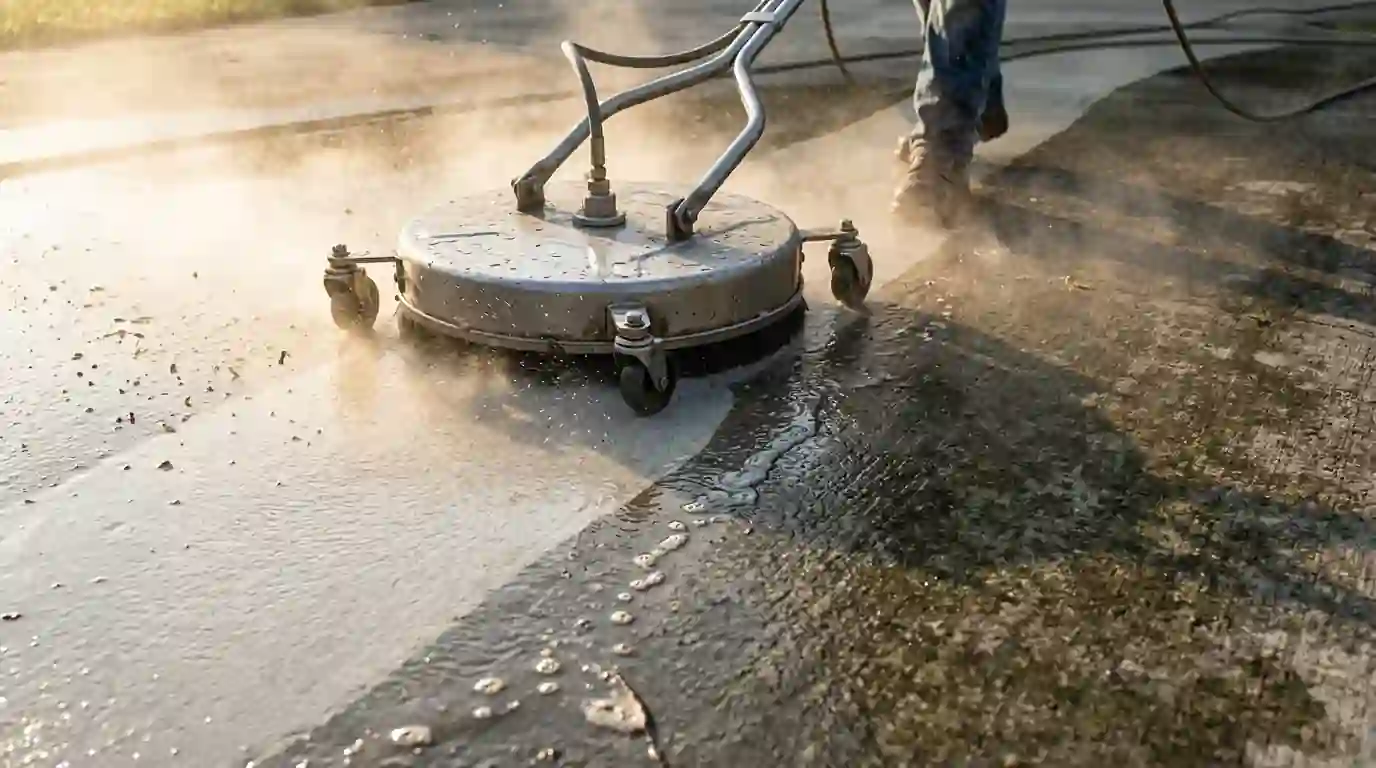
Stain sticks poorly to gray, loose fibers, so we clean the fence first. A wood cleaner with sodium percarbonate goes on with a pump sprayer and dwells for 10 to 15 minutes, lifting graying, dirt and mildew. We rinse at low pressure with a wide fan tip, which removes the gray without carving grooves into soft pine. An oxalic acid brightener follows, restoring color and neutralizing tannin stains, those dark streaks where nails and water meet cedar.
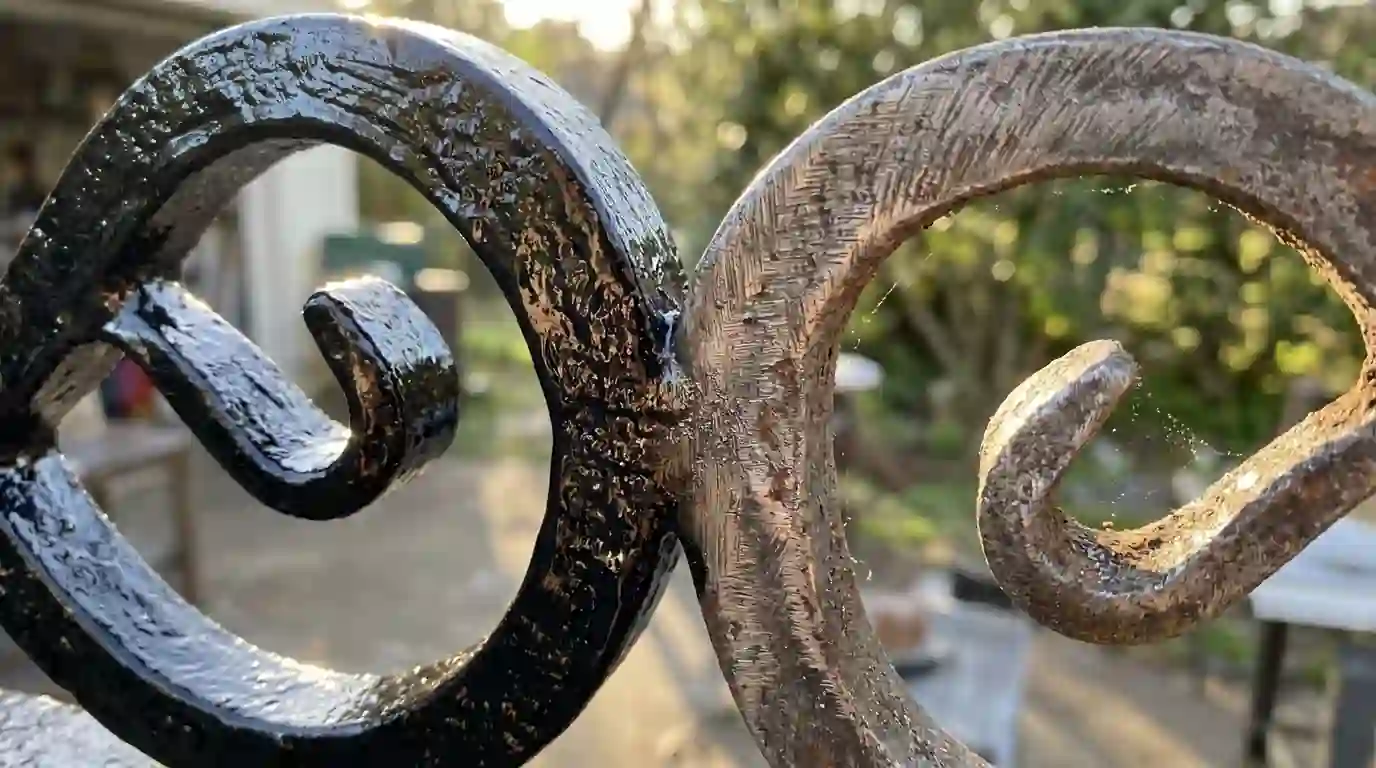
The fence then dries for at least two days in good weather. We use a moisture meter on a few pickets in sunny and shaded sections before staining, since stain soaks in best when the wood is dry. Loose pickets are refastened with exterior-rated screws or ring-shank nails, and broken ones can be swapped with new boards that we pre-treat so they blend. Nail heads bleeding rust get a quick wire brush so they don't streak the new color.
- Percarbonate cleaner for gray fibers and mildew
- Low-pressure fan-tip rinse that won't gouge soft wood
- Oxalic brightener to even out tannin streaks
- Moisture check before any stain is applied
What fence staining & painting typically costs in Fort Worth
$2.35 to $4.65 per linear foot
typical range per side for a six-foot wood privacy fence, not a quote. Your price comes from a written scope after we see the job.
What moves the number
- Total linear footage and fence height
- One side or both sides stained
- Cedar versus pine pickets and how weathered they are
- Board-on-board or shadowbox styles with extra edges
- Penetrating stain versus solid stain or paint
- Landscaping, pools or tight side yards along the fence
Stain or paint: which finish fits your fence?
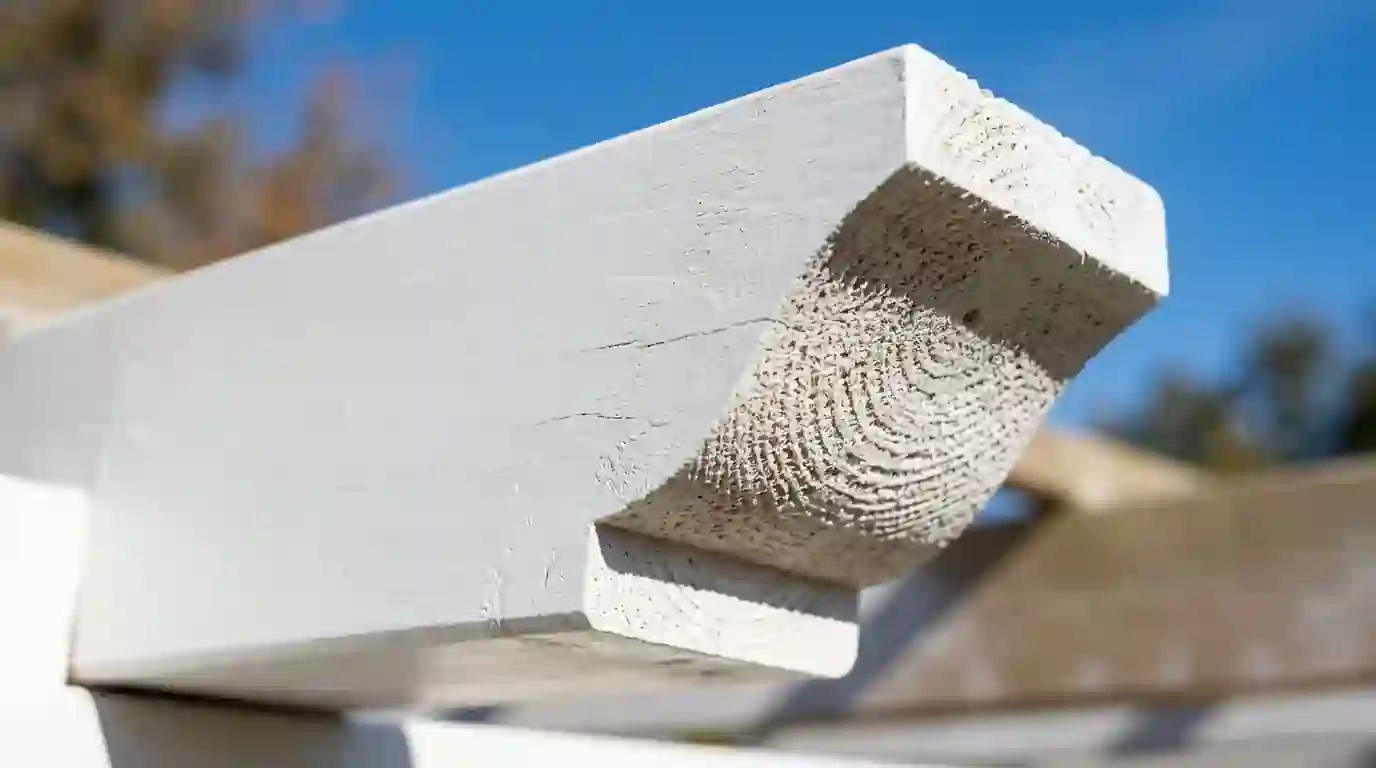
Semi-transparent oil or hybrid stains are the most popular choice for Fort Worth fences. They soak in, show the wood grain, and fade gradually without peeling, so recoating is simple. Expect three to five years before the street side needs another coat. Solid stains look more like paint and cover mismatched old and new pickets better, but they sit more on the surface. Exterior acrylic paint gives the most uniform color, and suits modern horizontal fences, but will eventually need scraping where it peels.
Color matters for neighborhoods with HOAs. Many communities in north and southwest Fort Worth require a specific stain color, often a cedar or redwood tone, for street-facing fences. We'll match the approved color and keep the product name and color on record. For fences shared with a neighbor, we stain only your side unless they agree to their side being done too. If you aren't sure where the property line runs, we'll stain only what you can confirm is yours.
How we keep overspray off cars, houses and neighbors
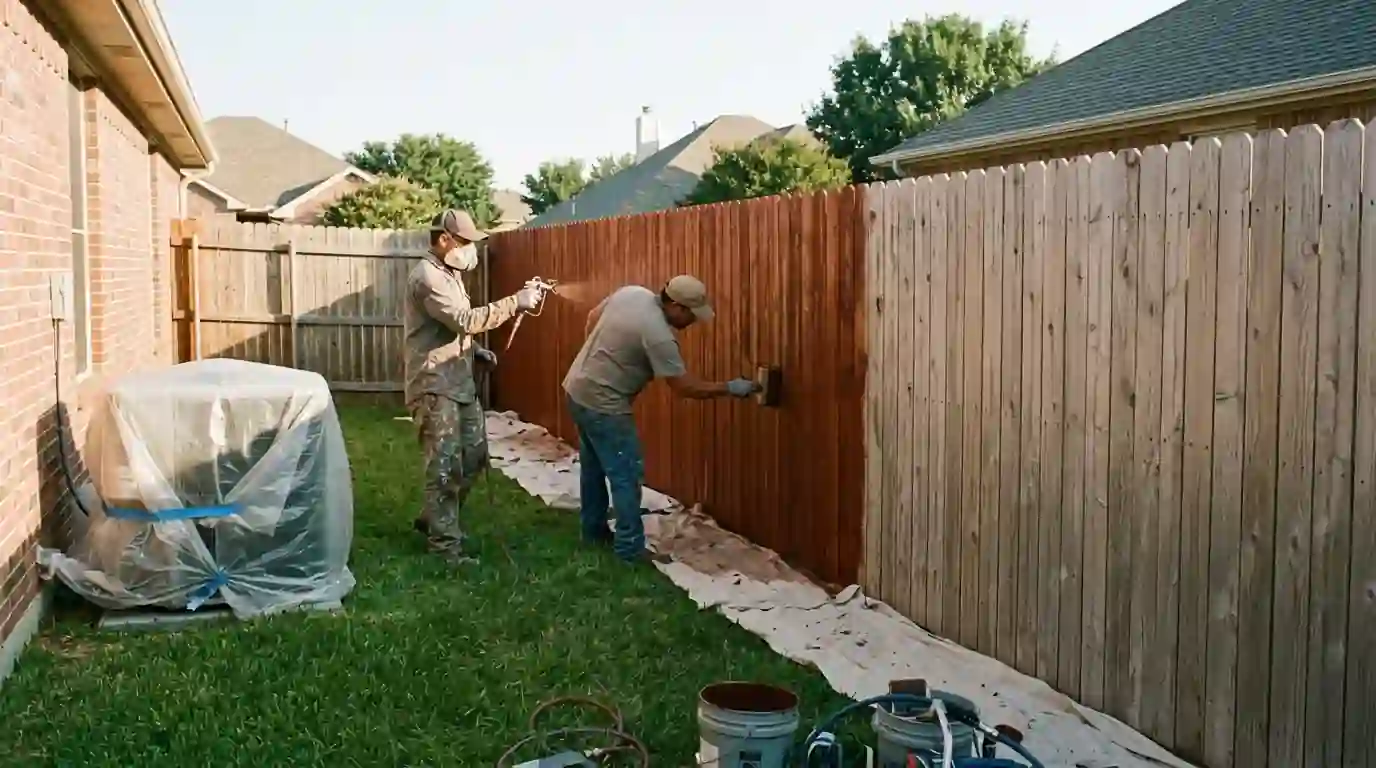
Spraying a fence is fast, but stain mist can drift on even a light breeze and land on cars, brick, windows and pool water. We check wind speed before spraying, and stop when gusts pick up. Plastic sheeting covers nearby siding, AC units, plants and pool edges. We use low-pressure, airless spray tips designed for stain and hold a spray shield on the far side of each picket when we're close to a neighbor's property, a car or a painted wall.
After spraying, a painter back-brushes each section so stain is pushed into the grain and into the gaps between pickets. Back-brushing evens out color and catches drips before they dry. Stain on rails and posts gets the same treatment, with extra attention to post tops, which drink water and split. If any stain lands where it shouldn't, we clean it up while it's still wet. Gate hinges and latches are masked so they keep working smoothly.
Signs it is time for fence staining & painting
- Fence pickets have turned silver-gray and look dry
- Boards are cupping, twisting or splitting at the nails
- Old stain has faded unevenly between sunny and shaded sections
- Black streaks run down from nail heads on cedar pickets
- New replacement pickets stand out against older weathered ones
- Your HOA sent a notice about fence color or condition
How we handle fence staining & painting, step by step
- 1
Walk the fence line
We measure linear footage, check pickets and posts for rot or looseness, note gates and landscaping, and confirm which sides and sections are being stained before we price the job.
- 2
Clean and brighten
Pickets, rails and posts are cleaned with a wood cleaner, rinsed at low pressure and brightened with an oxalic acid product to even out color and remove tannin streaks.
- 3
Dry and repair
The fence dries at least two days. We refasten loose pickets, replace broken boards with pre-treated ones, and check moisture on sunny and shaded runs before staining.
- 4
Protect the surroundings
Plastic and drop cloths cover siding, AC units, plants, pool edges and nearby cars. We check wind conditions and plan spray direction away from neighbors' property.
- 5
Spray and back-brush
Stain is sprayed with low-pressure tips and immediately back-brushed into grain, gaps, rails and post tops, working section by section from one post to the next to keep color even.
- 6
Cleanup and final look
Protection comes down, any stray stain is cleaned while wet, gates are checked for smooth swinging, and we walk the fence line with you before leaving.
Fort Worth conditions that shape fence staining & painting
Wood privacy fences line nearly every backyard in Fort Worth subdivisions, and most are pine or cedar pickets on wood or steel posts. Hard afternoon sun on west-facing runs, daily sprinkler spray, and our clay soil all work against them. That clay holds water against posts after rain and then shrinks away in summer, which can loosen posts and tilt sections. Many neighborhoods with HOAs, such as Summerfields, Heritage and newer communities in the north and southwest, set fence stain colors for street-facing sides. Spring and fall are ideal for staining here, although we also work early mornings through summer. After a wet spring, we allow extra drying time before staining.
Where we offer fence staining & painting around Fort Worth
Across Fort Worth (76102 and surrounding ZIP codes), including Fairmount, Ryan Place, Mistletoe Heights, Arlington Heights, Tanglewood, Westcliff and other neighborhoods, plus these nearby cities and counties:
- Arlington 76010
- Grand Prairie 75050
- North Richland Hills 76180
- Mansfield 76063
- Euless 76039
- Grapevine 76051
- Bedford 76021
- Keller 76248
- Burleson 76028
- Haltom City 76117
- Hurst 76053
- Southlake 76092
- Weatherford 76086
- Saginaw 76179
- Colleyville 76034
- Benbrook 76126
- Tarrant County 76102
- Denton County 76201
- Johnson County 76031
- Parker County 76086