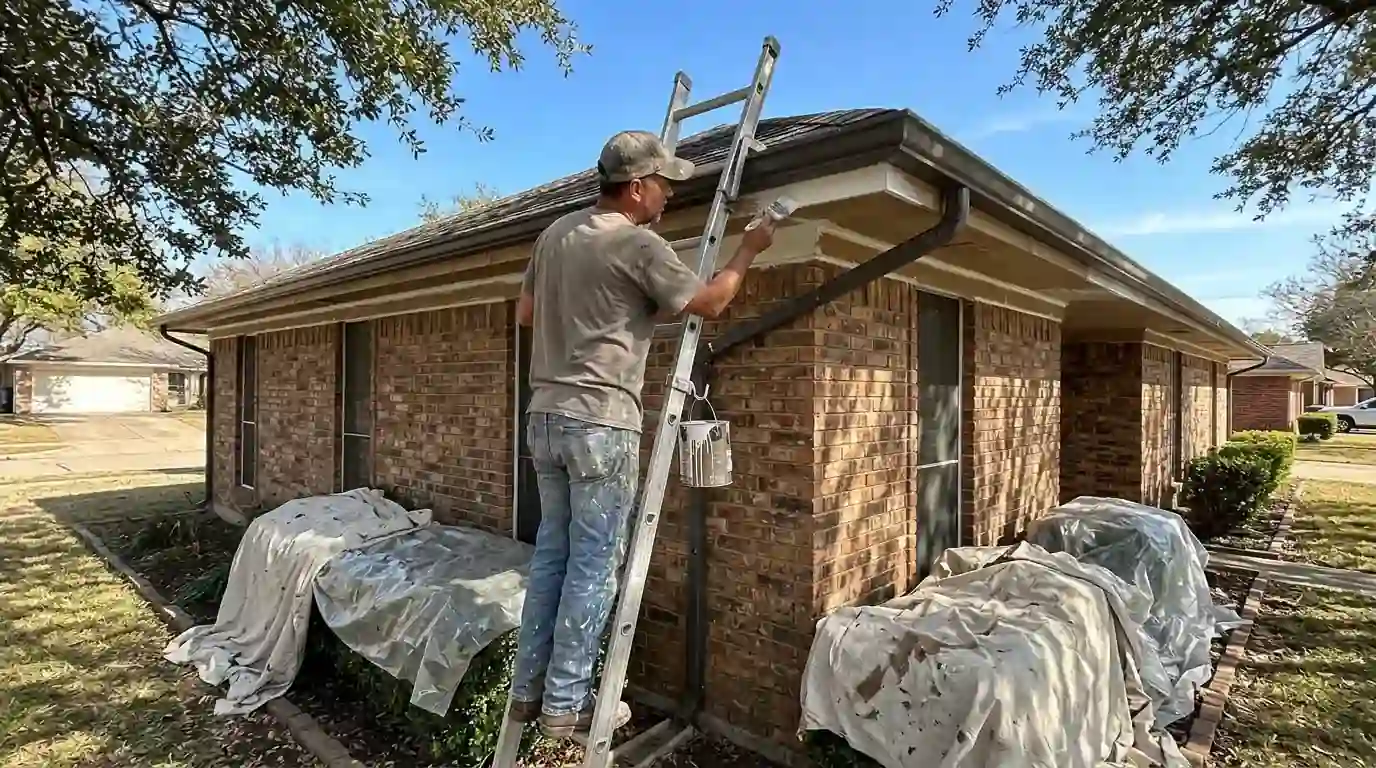
Why roofline trim is the first paint to fail
Fascia boards sit right under the roof edge, where gutters overflow, morning dew collects and afternoon sun bakes the face. When gutters back up during a heavy spring storm, water runs behind the gutter and soaks the top of the fascia. Paint peels there first, then the wood grays, checks and eventually softens. Window sills and the bottom ends of casings fail next, since water sits on their flat surfaces. Soffits usually hold paint longer, but they show water stains and mildew where roof leaks or condensation reach them.
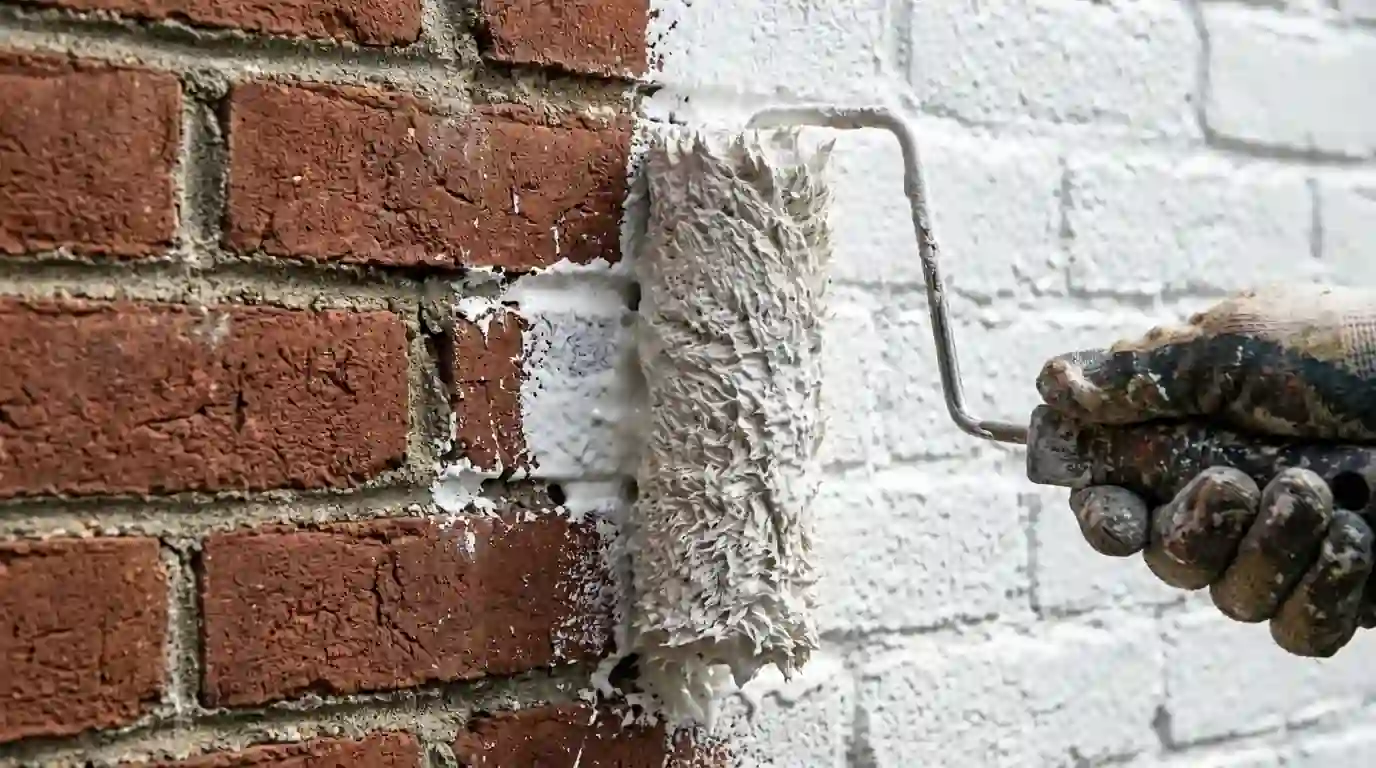
On a brick home, these painted surfaces are also the only visual frame for the house. Fresh trim makes brick look cleaner and the roofline crisp, which is why a trim-only repaint gives a lot of curb appeal for the money. It's also a shorter job than a full exterior. Most single-story trim repaints wrap up in two to four working days, and you can stay home the whole time, since we never need to come inside. Because the brick isn't being painted, you also avoid the long-term upkeep that painted masonry brings.
Finding and fixing soft wood before it's painted
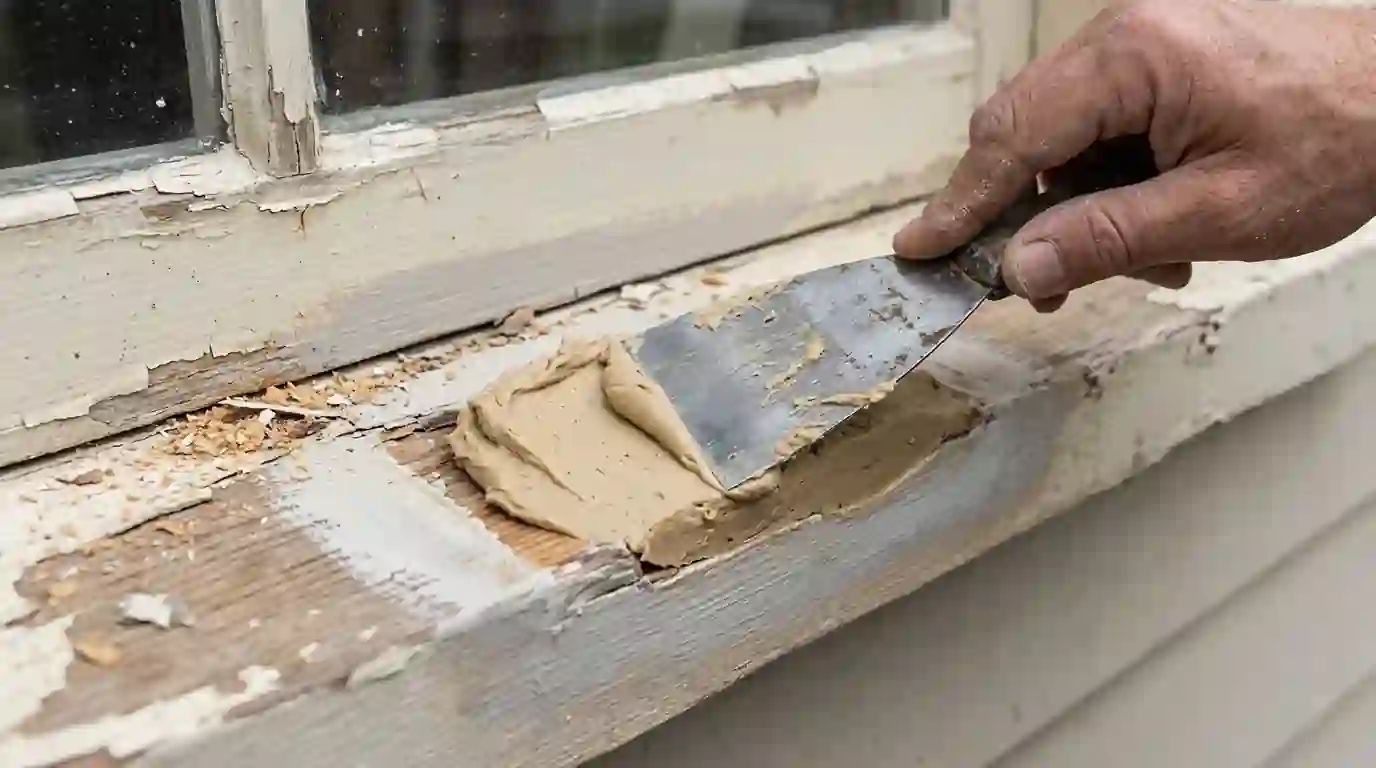
We probe fascia, sills, casings and corner boards with an awl during the walkthrough. Wood that lets the tip sink in easily is rotted and won't hold paint. Small areas can be dug out, treated with a wood consolidant and filled with a two-part epoxy filler that's shaped and sanded to match. Longer runs of rotted fascia are cut out and replaced with primed pine, cedar or a PVC or fiber-cement board, depending on what's there and how wet that spot gets.
Replacement boards get primed on all faces before they go up, including the back and cut ends, so they don't drink water from behind. We also check the gutter fasteners and drip edge while we're on the ladder, and note any spots where water is clearly getting behind the gutter so you can have it adjusted. Epoxy repairs need a few hours to harden before sanding, so we schedule them first thing and paint the patched areas later in the job.
- Awl probe on every sill, casing and fascia run
- Epoxy repair for small, localized rot
- Board replacement for long or structural sections
- Back-priming and end-sealing every new board
What trim, fascia & soffit painting typically costs in Fort Worth
$1,850 to $5,200
typical range for trim, fascia and soffits on a single or two-story brick home, not a quote. Your price comes from a written scope after we see the job.
What moves the number
- Linear feet of fascia and trim
- One or two stories and roof pitch
- Number of rotted boards to replace
- Caulk joints along brick to cut out and redo
- Enclosed versus open-rafter or vented soffits
- Shutters, gable vents and window grilles included
Where brick meets wood: caulk that moves with the house
The joint between brick veneer and wood trim is where Fort Worth's shifting clay soil shows up most. As the foundation settles and swells, brick and wood move slightly differently, and old caulk splits or pulls loose. Those gaps let rain and insects in behind the trim. We cut out failed caulk with a utility knife or multi-tool rather than smearing new caulk on top, because new bead over cracked bead fails at the same line.
Deep gaps get closed-cell backer rod so the new sealant can flex in an hourglass shape instead of tearing. We use a high-performance elastomeric or polyurethane-modified sealant rated for masonry-to-wood joints, tool it smooth, and let it skin over before painting. Window perimeters, door frames and frieze boards all get the same treatment. Most sealants of this type want temperatures above 40F during application and a dry joint, so we hold caulking on foggy mornings until the wood dries out. The result is a joint that flexes through a wet spring and a dry August.
Paint, sheen and color for trim that stays crisp
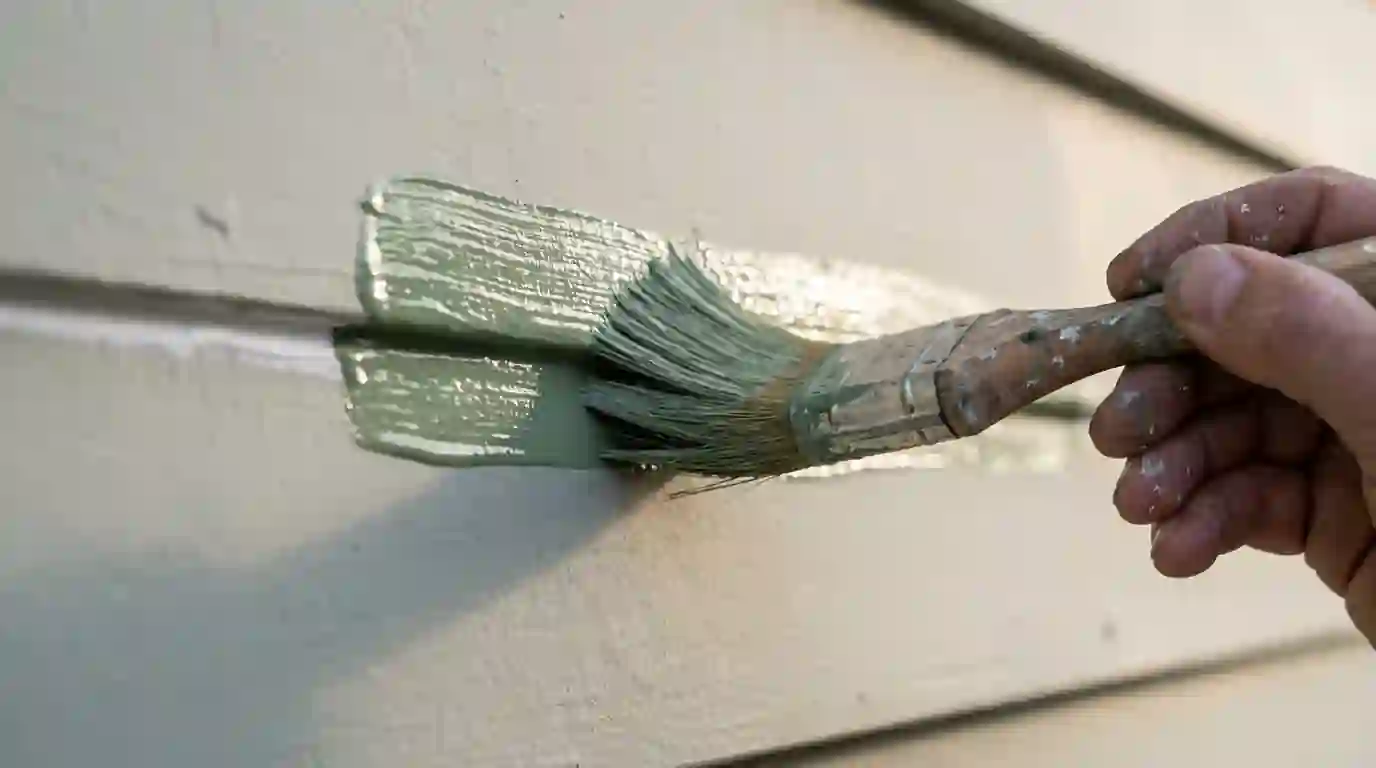
Trim takes more abuse than siding, so we use a premium 100% acrylic exterior paint in satin or semi-gloss. The higher sheen sheds water, resists dirt and wipes clean, which suits window sills and door casings. Soffits usually get a flat or low-sheen finish to hide minor surface flaws when you look up at them. Bare wood is spot-primed with an exterior primer, and knots on pine fascia get a stain-blocking primer so sap doesn't bleed through a white finish in the heat.
Color makes a big difference on brick homes. Bright white trim can look harsh next to warm red brick, while a soft cream, greige or a darker bronze can tie brick and roof together. We'll bring large painted samples and hold them against your brick and shingles before you pick. If your roof was recently replaced, the new shingle color may shift which trim tones work best, so we bring a few options rather than one.
Working at the roofline safely and cleanly
Fascia and soffit work happens on ladders and sometimes on the roof edge on two-story homes. We use ladder stabilizers that rest against the wall rather than the gutter, so gutters aren't crushed, and we place pads under ladder feet on patios and walkways. Drop cloths cover beds and hardscape, since scraping old paint sends chips everywhere. At the end of each day, debris is swept and bagged, and we run a magnet over the lawn when any nails have been pulled from replaced boards.
Signs it is time for trim, fascia & soffit painting
- Paint is peeling or gray wood shows along the fascia under the gutters
- Caulk has cracked or pulled away where wood trim meets brick
- Window sills feel soft when you press them with a thumbnail
- Soffits have brown water stains or dark mildew patches
- White trim has yellowed or chalked next to clean brick
- Birds or wasps are nesting behind gaps in the frieze boards
How we handle trim, fascia & soffit painting, step by step
- 1
Probe and plan
We walk the roofline and windows, probing wood for rot, noting failed caulk and peeling areas, and agreeing which trim pieces, vents and shutters are part of the job.
- 2
Clean the trim
Fascia, soffits and casings are washed to remove dust, chalk, cobwebs and mildew, and gutters are checked so overflow water isn't still wetting the boards we're about to paint.
- 3
Repair and replace
Small rot is epoxy filled and sanded, longer sections are replaced with primed boards, and every new piece is sealed on its ends and back before installation.
- 4
Cut out and recaulk
Old caulk at brick joints, window frames and miters is removed, backer rod goes in deep gaps, and new flexible sealant is tooled smooth and allowed to skin.
- 5
Prime and paint
Bare wood and knots get primer, then two coats of exterior acrylic go on fascia, casings and sills, with soffits in a flat or low-sheen finish.
- 6
Clean up and walk
We pick up paint chips, run a magnet for nails, remove masking from brick and glass, and check every window and corner with you before we pack up.
Fort Worth conditions that shape trim, fascia & soffit painting
Brick veneer with painted wood trim is the standard look across Fort Worth, from 1950s ranches in Ridglea Hills and Wedgwood to 1990s homes in Heritage and Park Glen. That makes trim the main painting maintenance item for most homeowners here. The combination of hard summer UV on west-facing fascia, spring storms that overflow gutters, and expansive clay soils that open caulk joints at brick means trim usually needs attention every five to seven years, even when the brick looks fine. Hail can also dent aluminum fascia wrap and chip painted trim. We plan most trim jobs for mornings in summer, since rooflines face the sun all afternoon with no shade.
Where we offer trim, fascia & soffit painting around Fort Worth
Across Fort Worth (76102 and surrounding ZIP codes), including Fairmount, Ryan Place, Mistletoe Heights, Arlington Heights, Tanglewood, Westcliff and other neighborhoods, plus these nearby cities and counties:
- Arlington 76010
- Grand Prairie 75050
- North Richland Hills 76180
- Mansfield 76063
- Euless 76039
- Grapevine 76051
- Bedford 76021
- Keller 76248
- Burleson 76028
- Haltom City 76117
- Hurst 76053
- Southlake 76092
- Weatherford 76086
- Saginaw 76179
- Colleyville 76034
- Benbrook 76126
- Tarrant County 76102
- Denton County 76201
- Johnson County 76031
- Parker County 76086