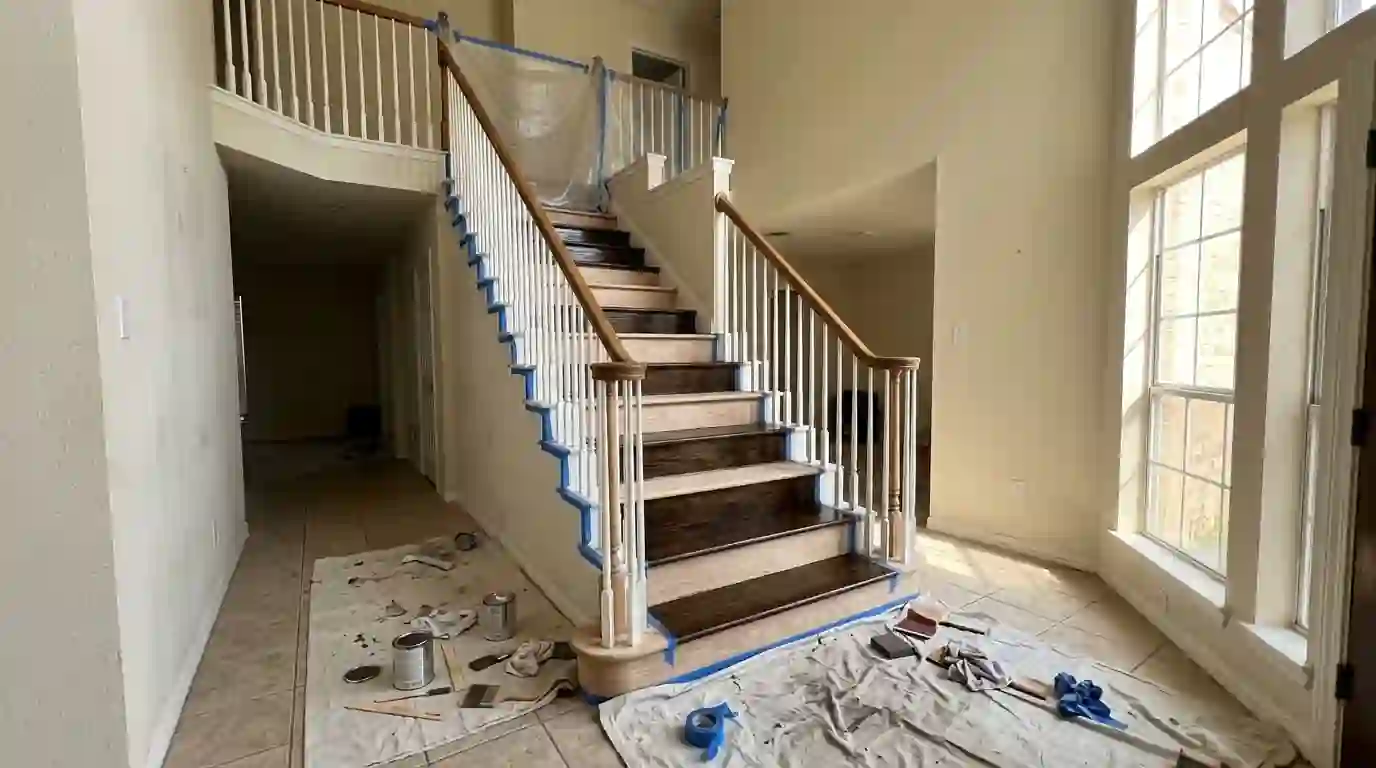
Treads take a different finish than the rest of the stairs
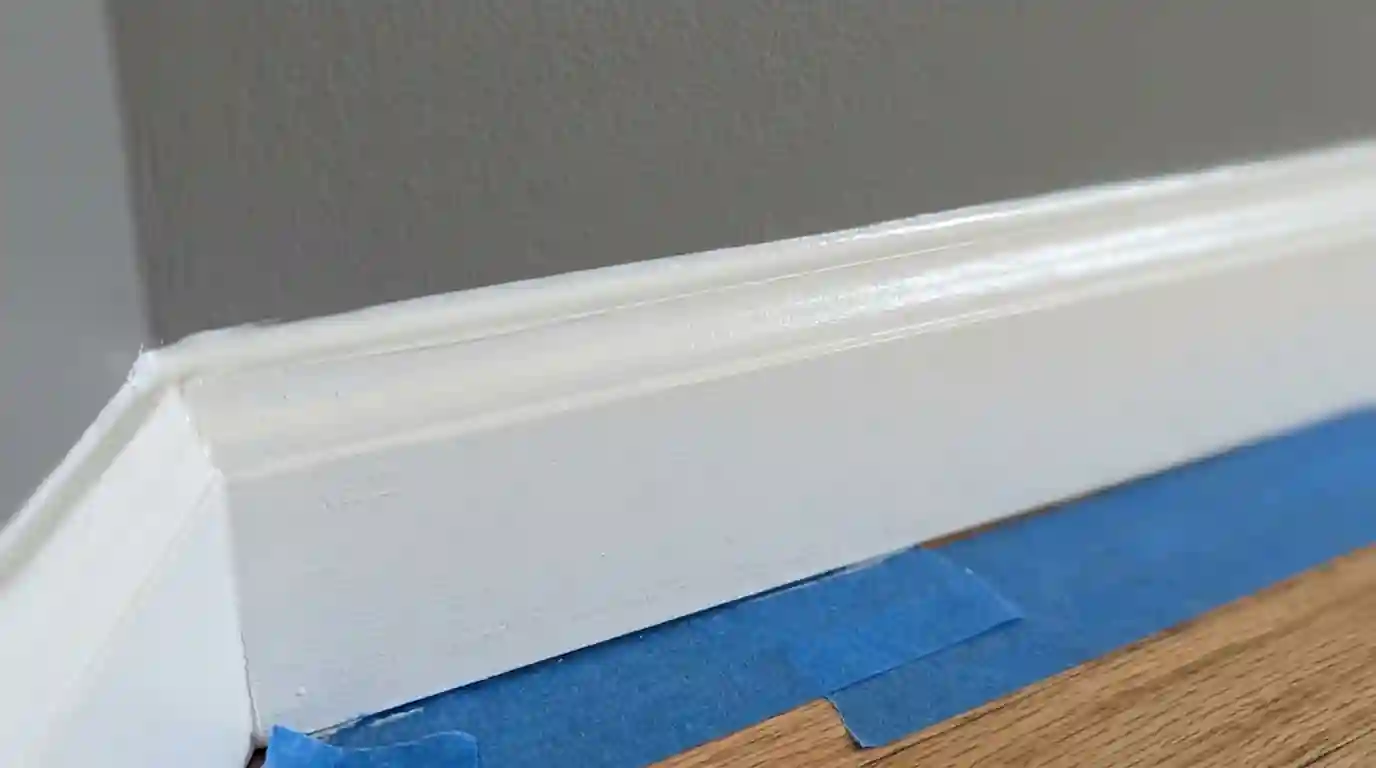
Stair treads are a floor, and they need a floor finish. Wall or trim enamel on a tread wears through in weeks under shoes and socks. For stained treads, we sand to bare wood, apply stain, and finish with three coats of a floor-grade polyurethane, water-based for low odor and clarity or oil-modified for a warmer amber tone. For painted treads, we use a porch and floor enamel and often add a clear floor coat over the top. Satin is the most popular sheen, since gloss is slippery and shows every scratch. Risers, skirt boards and stringers don't take foot traffic, so they get a durable trim enamel that's easier to keep clean.
Why stained oak handrails go orange and how we change them
Many 1990s and 2000s Fort Worth homes have red oak handrails and newel posts finished in a golden or honey stain with an oil-based clear coat. Over twenty years that finish ambers further, which is why so many rails now look orange next to updated floors. Simply staining over the top won't work, because stain can't soak through existing finish. We strip or sand the rail to bare wood, using hand sanding and card scrapers on curves and fittings, then apply a new stain such as a dark walnut or ebony and seal with a durable clear finish. A full strip and stain takes more time than painting, but it keeps the grain visible. Painting the handrail black or dark bronze is a quicker alternative some homeowners choose.
What staircase & banister refinishing typically costs in Fort Worth
$1,950 to $4,650
for a straight 13 to 15 step staircase with handrail, balusters, risers and treads. Your price comes from a written scope after we see the job.
What moves the number
- Stain on treads versus paint only
- Number and style of balusters
- Carpet removal and tread repair
- Curved, open or landing staircases
- Iron baluster painting or replacement
- Water-based versus oil-modified clear coat
Painting balusters without a drippy mess
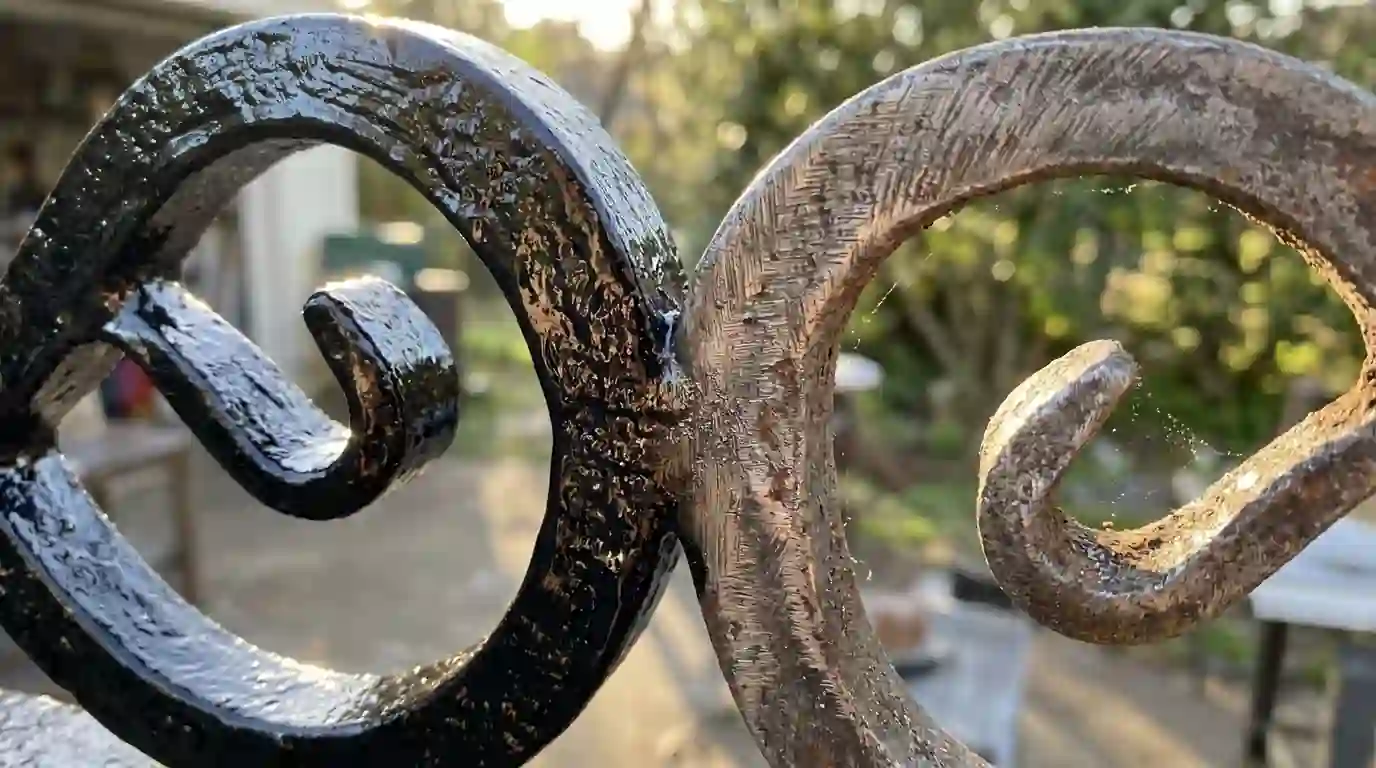
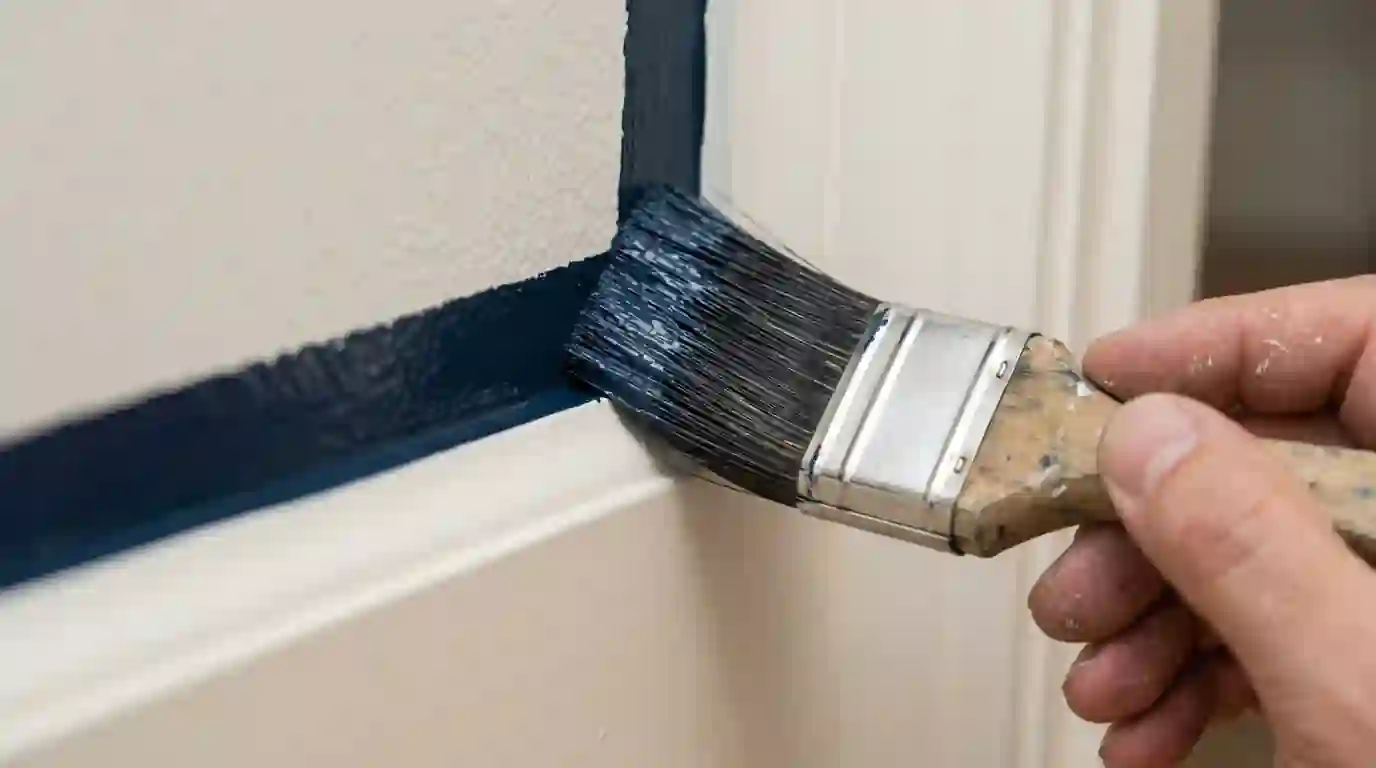
Wood balusters, often called spindles, are the most time-consuming part of a staircase. Each one has turned details where drips collect. We clean them, scuff sand with a sanding sponge, spot prime any bare wood and brush each spindle top to bottom, checking the backside for runs before moving on. Spraying is faster but needs extensive masking of walls, rails and floors, so we only spray when the whole stair area can be sealed off. Iron balusters are cleaned, degreased and coated with a direct-to-metal paint. If a few are loose in their shoes, we secure them before painting.
- Wood spindles: scuff, spot prime, brush two enamel coats
- Iron balusters: degrease and direct-to-metal finish
- Loose balusters secured before any paint goes on
- Newel posts and caps finished to match the rail
Keeping the stairs usable during the job
Most families can't go without stairs for three days. We finish treads in an alternating pattern, every other step one day and the rest the next, so you can still go up and down carefully by stepping on dry treads. Bedrooms upstairs stay reachable. When carpet is coming off the stairs, we pull tack strips and staples and inspect the treads underneath, since many builder stairs have pine or MDF treads meant to be carpeted. Those may need new oak tread caps before they can be stained.
Dust control on a staircase
Sanding a staircase puts dust right into the center of the house, where it can travel to every floor. We hang plastic barriers at the top and bottom, use sanders connected to HEPA vacuums, and wipe down with a microfiber cloth between coats. Dust nibs in a clear coat look like grit and feel rough under bare feet, so we sand lightly with 320 grit between coats and vacuum before each pass.
Signs it is time for staircase & banister refinishing
- Bare gray wood showing in a path down the middle of each tread
- An orange-toned oak handrail that clashes with new floors
- Chipped paint on spindles near the bottom where vacuums hit
- Worn carpet on stairs you'd like to replace with wood
- Sticky or gummy handrail finish that feels rough in the hand
- Scuffed white risers marked by shoes and pet claws
How we handle staircase & banister refinishing, step by step
- 1
Assess the staircase
We identify the tread species, existing finishes, loose balusters and any carpeted treads, and agree on stain color, paint color and clear coat sheen for each part.
- 2
Contain and protect
Plastic barriers go up at the top and bottom of the stairs, nearby floors and walls are covered, and HEPA vacuums are set up for sanding.
- 3
Sand and strip
Treads and handrail are sanded to bare wood, curves and fittings are hand scraped, and spindles and risers get a scuff sand with any loose parts secured.
- 4
Stain and prime
Stain test patches are approved, then treads and rail are stained while risers, spindles and skirts are primed where wood or old filler is exposed.
- 5
Paint and clear coat
Enamel goes on spindles, risers and skirts, and treads and rail get three coats of floor-grade finish, applied on alternating steps to keep stairs usable.
- 6
Final cure guidance
We remove barriers, inspect every tread and spindle with you and explain when socks, shoes, rugs and furniture moving can safely go back on the stairs.
Fort Worth conditions that shape staircase & banister refinishing
Fort Worth weather affects staircases inside the home more than people realize. When clay soils shift under the slab, stair stringers can pull slightly away from the wall, opening a gap at the skirt board and loosening a few balusters, so we recaulk skirts and tighten loose parts as part of the prep. Humidity during spring storm weeks slows polyurethane drying, while dry winter air with the heat running speeds it up, so we time coats by the conditions rather than the label alone. Big two-story entries in many 1990s and 2000s homes north of Loop 820 and in Fossil Creek and Park Glen get strong afternoon light, which highlights dust and brush marks in a clear finish.
Where we offer staircase & banister refinishing around Fort Worth
Across Fort Worth (76102 and surrounding ZIP codes), including Fairmount, Ryan Place, Mistletoe Heights, Arlington Heights, Tanglewood, Westcliff and other neighborhoods, plus these nearby cities and counties:
- Arlington 76010
- Grand Prairie 75050
- North Richland Hills 76180
- Mansfield 76063
- Euless 76039
- Grapevine 76051
- Bedford 76021
- Keller 76248
- Burleson 76028
- Haltom City 76117
- Hurst 76053
- Southlake 76092
- Weatherford 76086
- Saginaw 76179
- Colleyville 76034
- Benbrook 76126
- Tarrant County 76102
- Denton County 76201
- Johnson County 76031
- Parker County 76086