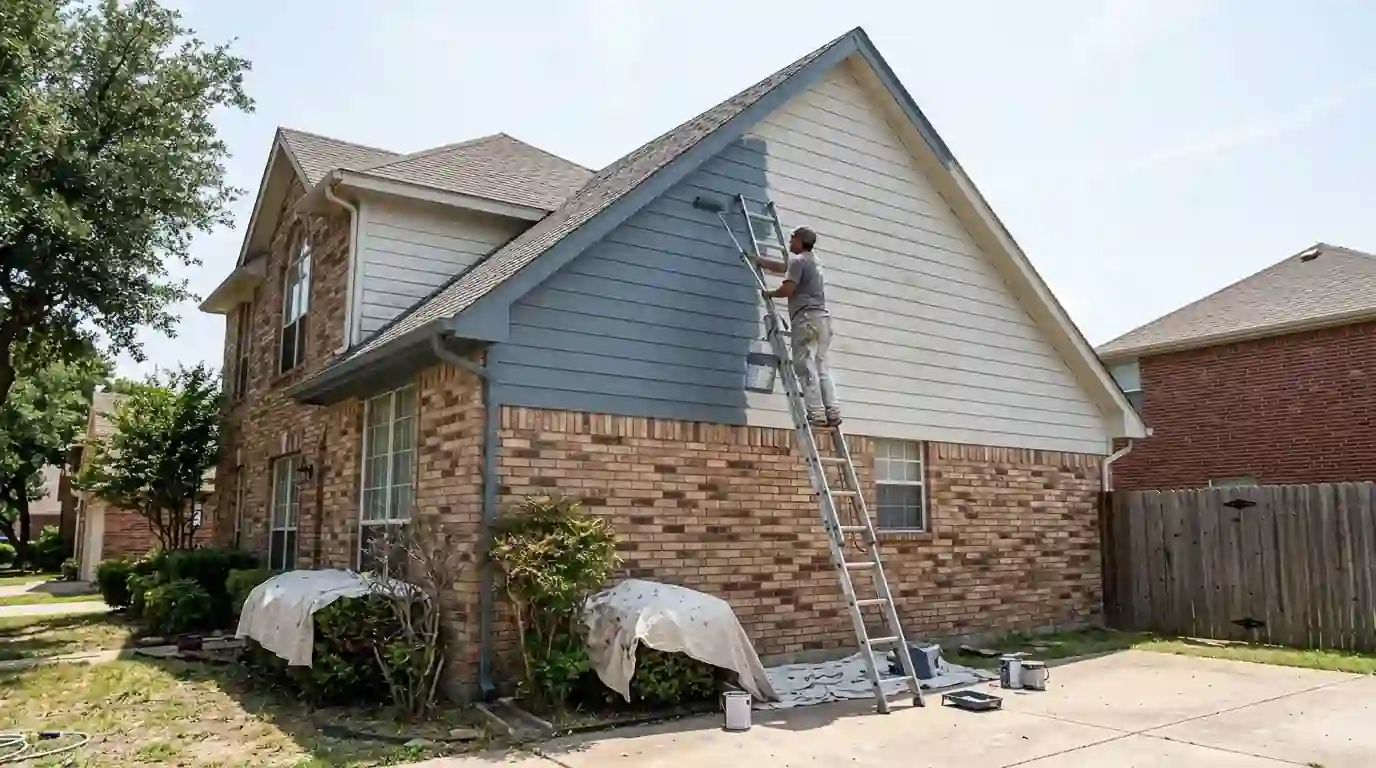
Know which siding you have before choosing paint
Cedar and pine lap siding is common on older Fort Worth homes in neighborhoods like Fairmount and Arlington Heights. Fiber-cement planks, often branded Hardie, cover gables and second stories on homes built from the late 1990s on. Hardboard siding, a pressed wood-fiber product, was widely used in the 1980s and early 1990s and tends to swell along bottom edges. Vinyl shows up on some additions and gables. We confirm the material by checking cut ends, nail patterns and weight, because the prep and paint differ for each.
Getting this right matters. Hardboard that's painted without sealing its edges keeps wicking water and flakes again in a year. Vinyl painted in a dark color it wasn't designed for can bow in the sun. Wood siding hides rot behind paint unless someone probes it. Fiber-cement is the most forgiving of the four, yet its cut ends drink water if they were never sealed at install. Knowing the material up front lets us price the right amount of repair, rather than discovering surprises once the ladders are up and the first coat is drying.
Prep that's specific to each siding type
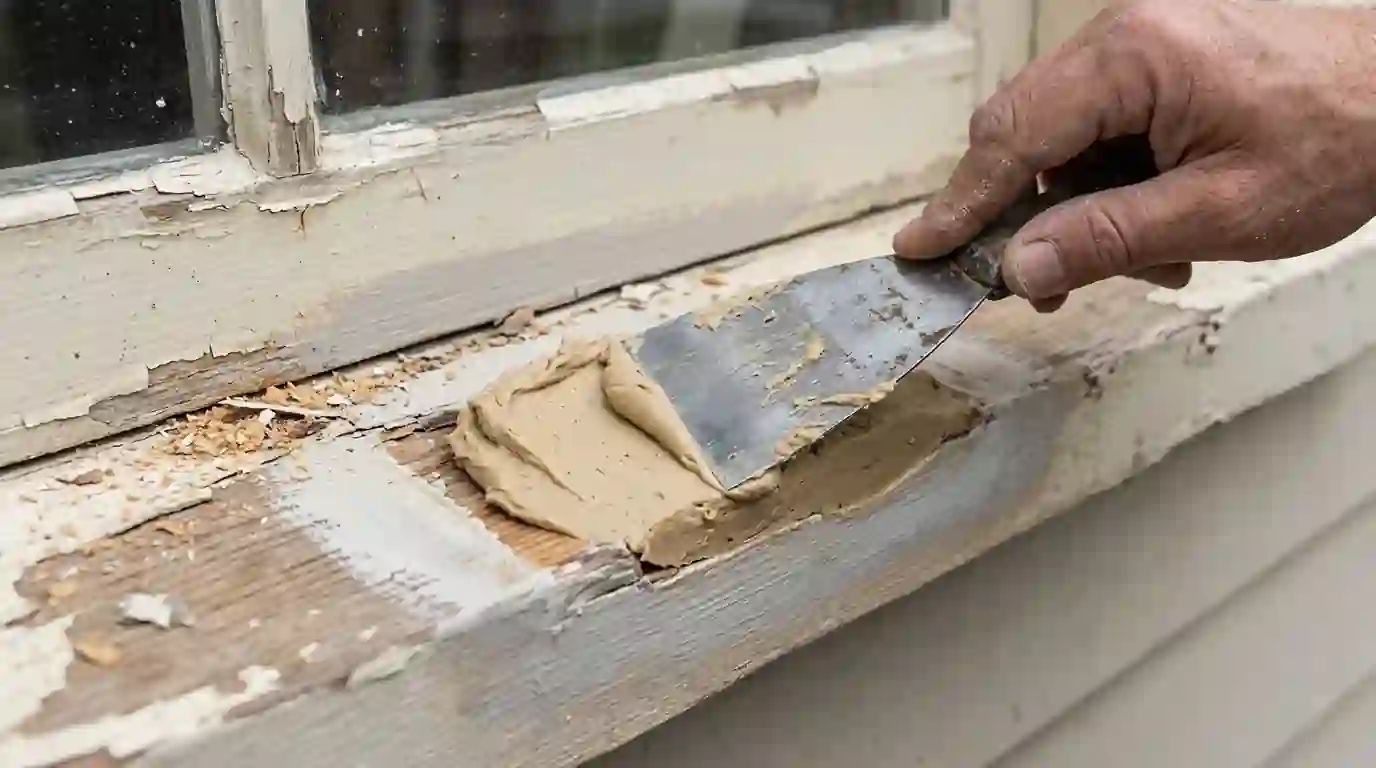
On wood siding we scrape loose paint, sand edges smooth with 80 and 120-grit, and spot-prime bare wood with an exterior oil or bonding primer. Homes built before 1978 may have lead-based paint in older layers, so we use lead-safe practices for scraping and sanding on those houses, including plastic sheeting under work areas and careful cleanup. Fiber-cement usually needs only a thorough wash, caulk at butt joints, and primer on any cut or exposed edges.
Hardboard gets the most attention. We probe the drip edge of each lower course, replace boards that are soft or mushroomed, and seal the bottom edges with primer, sometimes brushing it up under the lap with a narrow brush. Vinyl gets a mild cleaner to remove oxidation and dust. It doesn't need sanding, but it does need a bonding primer when a manufacturer requires one for the chosen paint. Every material then gets the same final check: a light wipe to confirm no chalk remains.
- Wood: scrape, sand, spot-prime, check for rot
- Fiber-cement: wash, caulk butt joints, prime cut edges
- Hardboard: replace swollen boards, seal drip edges
- Vinyl: clean oxidation, choose vinyl-safe colors
What siding painting typically costs in Fort Worth
$2,950 to $8,700
typical range for 800 to 2,000 sq ft of painted siding, not a quote. Your price comes from a written scope after we see the job.
What moves the number
- Siding material: wood, fiber-cement, hardboard or vinyl
- Swollen hardboard or cracked planks to replace
- Two-story gables and dormers needing tall ladders
- Dark-to-light or light-to-dark color change
- Scraping and sanding on older wood siding
- Trim and window casings painted at the same time
Can you paint vinyl siding a darker color safely?
Vinyl expands and softens as it heats, and a darker color makes it absorb far more sun. On a west-facing wall in a Fort Worth August, a dark gray or navy vinyl plank can get hot enough to warp, buckle or pull off its fasteners. That's why major paint makers offer vinyl-safe color collections, formulated with pigments that reflect more heat. We stay within those collections or no darker than the original vinyl color.
If you really want a dark exterior and the house has vinyl siding, we'll be straight with you about the risk. Sometimes the right answer is painting the vinyl a vinyl-safe mid-tone and using the darker shade on trim, shutters or the front door instead, where heat buildup isn't a structural problem. We'll also point out vinyl that's already warped or loose, since paint won't flatten it and those panels are better swapped before we start. Light and mid-tone grays, tans, sages and soft blues are usually safe choices on vinyl here.
Coats, sheen and drying on lap siding
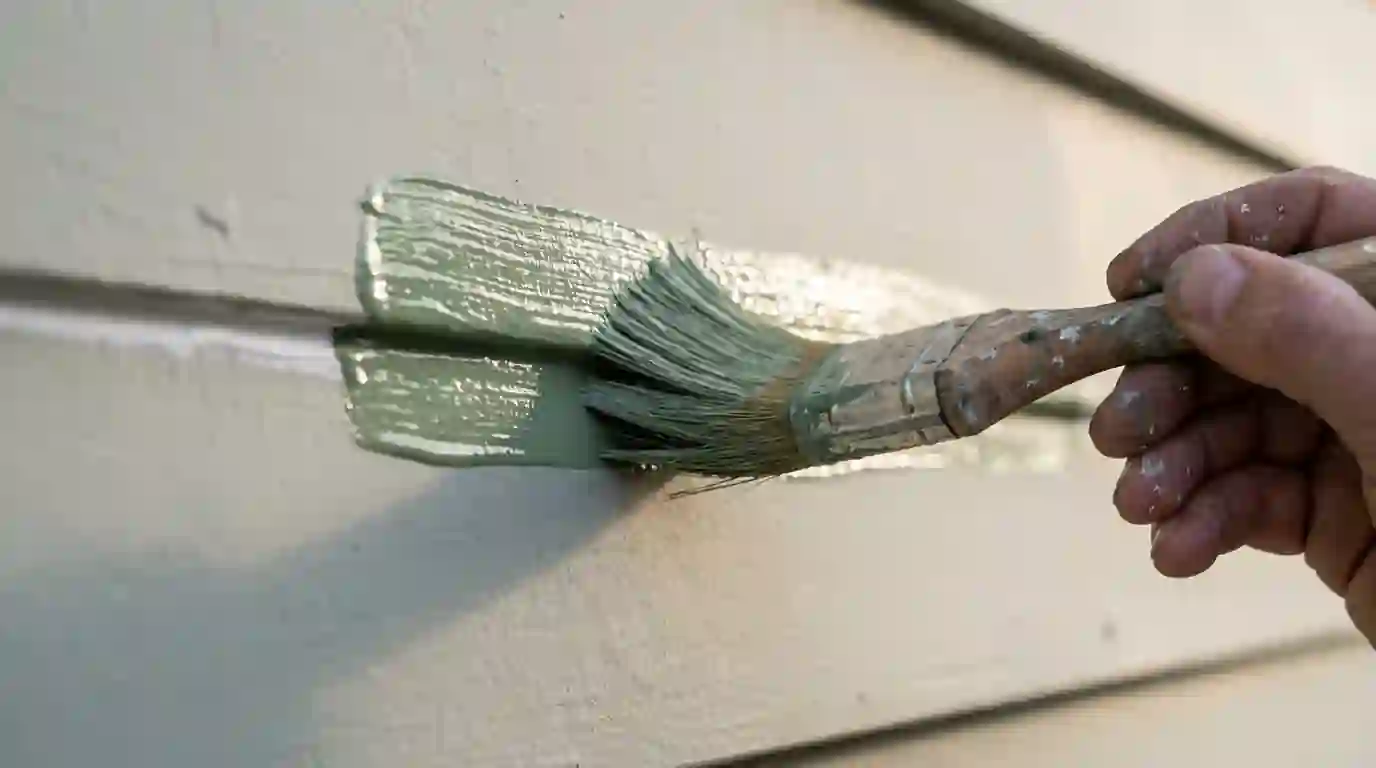
Lap siding has a lot of edges, and every bottom edge needs paint pushed into it. We brush or roll the underside of each lap first, then roll or spray the face and back-brush so the paint gets worked into the grain and any knots. Two coats of 100% acrylic, each at the manufacturer's recommended film thickness, is our standard. Satin or low-lustre is the most common sheen on siding, since it cleans easily and hides minor board imperfections.
Acrylics are typically dry to the touch within an hour and recoatable in about four hours at 70F with moderate humidity. Cool, damp mornings slow that down. We avoid painting siding in direct afternoon sun in summer and keep the surface temperature within the label range, usually 35F to 50F at the low end and around 90F at the high end. On two-story gables we also watch wind, since gusts dry paint unevenly and carry overspray onto roofs and cars.
Signs it is time for siding painting
- Bottom edges of hardboard planks are swollen, soft or flaking
- Paint is peeling down to bare gray wood on older siding
- Fiber-cement looks chalky and faded on the sunny side
- Gaps have opened at butt joints where planks meet
- Woodpecker holes or hail dings dot the gable siding
- Vinyl has faded unevenly and looks dull next to new trim
How we handle siding painting, step by step
- 1
Identify and inspect
We confirm the siding type on each wall, probe lower courses and window areas for rot or swelling, test old paint adhesion, and note which planks need replacement before painting.
- 2
Wash the siding
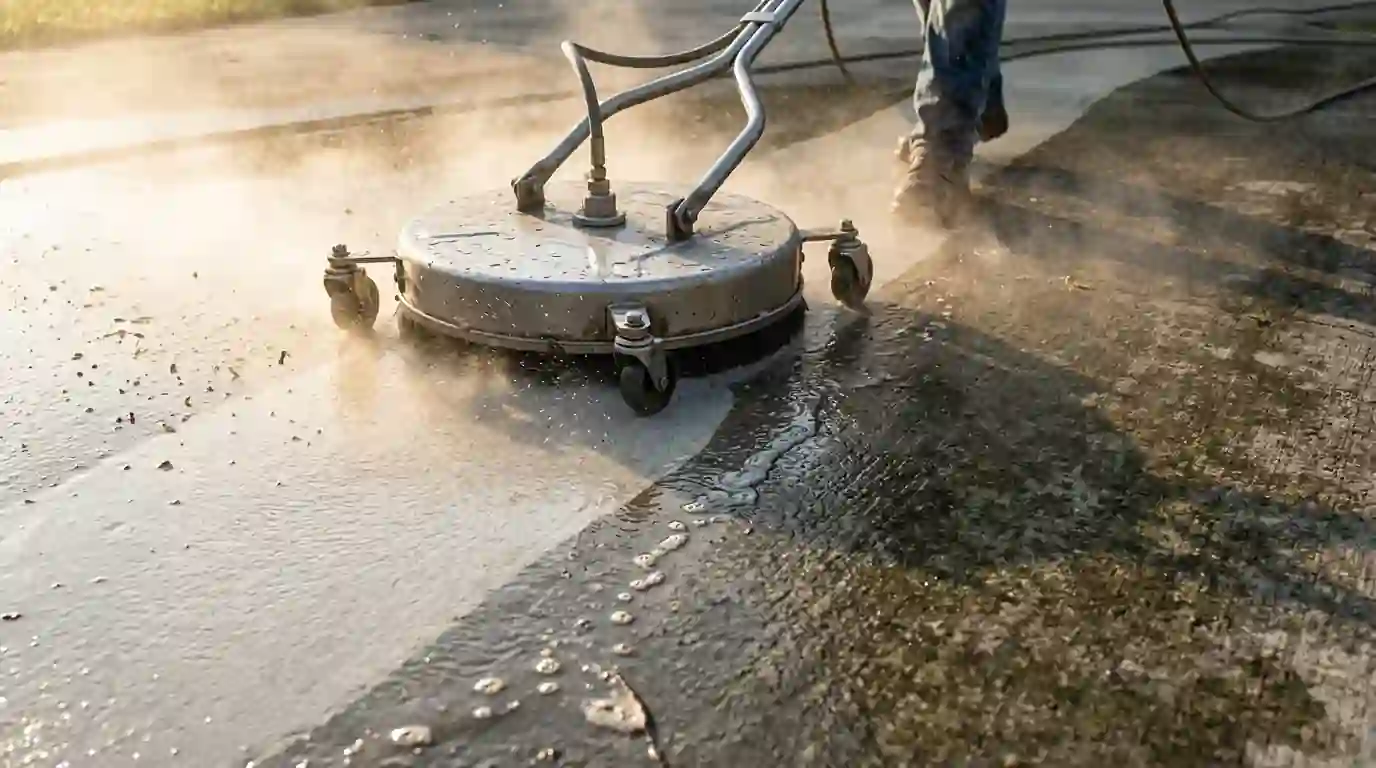
Siding gets a cleaning solution and a low-pressure rinse to remove chalk, dust, pollen and mildew, then dries fully before any scraping, sanding or primer begins.
- 3
Repair boards and joints
Damaged planks are replaced with matching profiles, nails are set, butt joints and corner boards are caulked with a paintable exterior sealant, and hardboard edges are sealed.
- 4
Prime bare and new areas
Bare wood, new boards, cut fiber-cement edges and any vinyl needing a bonding primer are primed, and windows, roof edges and landscaping are protected before topcoats.
- 5
Apply two acrylic coats
We paint undersides of each lap first, then faces, using two coats of 100% acrylic exterior paint applied in shade with recoat times followed between coats.
- 6
Final check
We inspect laps and edges for misses from the ground and the ladder, remove masking, clean up paint chips and leave labeled touch-up paint for you to keep.
Fort Worth conditions that shape siding painting
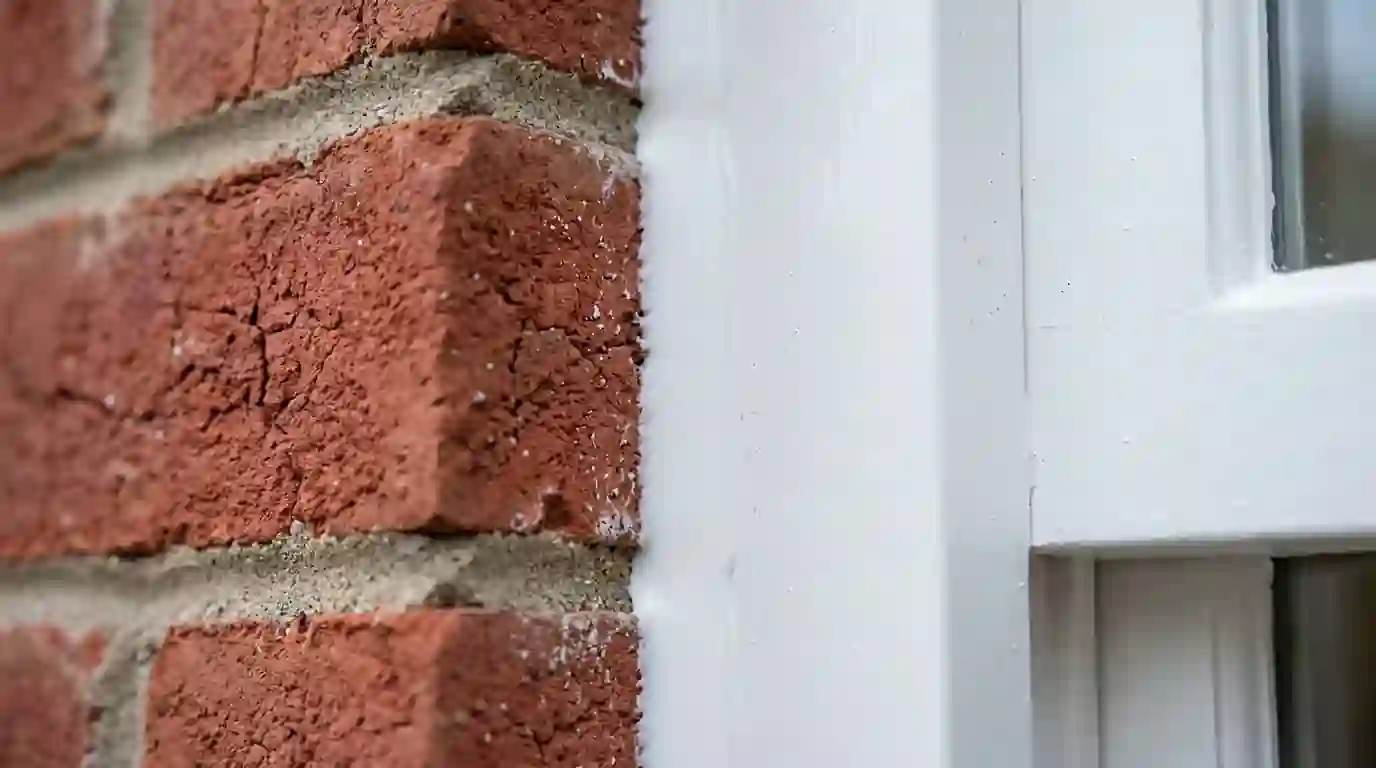
Fort Worth homes often have brick on the first floor and siding on gables, dormers and second stories, which means the siding is the part closest to the hottest sun and hardest to reach. That's where UV fading and chalking show first. Older wood siding in the near-west and near-south neighborhoods may carry lead-era paint layers, so we follow lead-safe work practices there. Many 1980s and early 1990s homes in places like Summerfields and Park Glen still have hardboard siding with swollen drip edges from years of sprinkler spray and rain. Hail from spring storms also dents and chips siding, especially on west and north gables facing the storm track.
Where we offer siding painting around Fort Worth
Across Fort Worth (76102 and surrounding ZIP codes), including Fairmount, Ryan Place, Mistletoe Heights, Arlington Heights, Tanglewood, Westcliff and other neighborhoods, plus these nearby cities and counties:
- Arlington 76010
- Grand Prairie 75050
- North Richland Hills 76180
- Mansfield 76063
- Euless 76039
- Grapevine 76051
- Bedford 76021
- Keller 76248
- Burleson 76028
- Haltom City 76117
- Hurst 76053
- Southlake 76092
- Weatherford 76086
- Saginaw 76179
- Colleyville 76034
- Benbrook 76126
- Tarrant County 76102
- Denton County 76201
- Johnson County 76031
- Parker County 76086