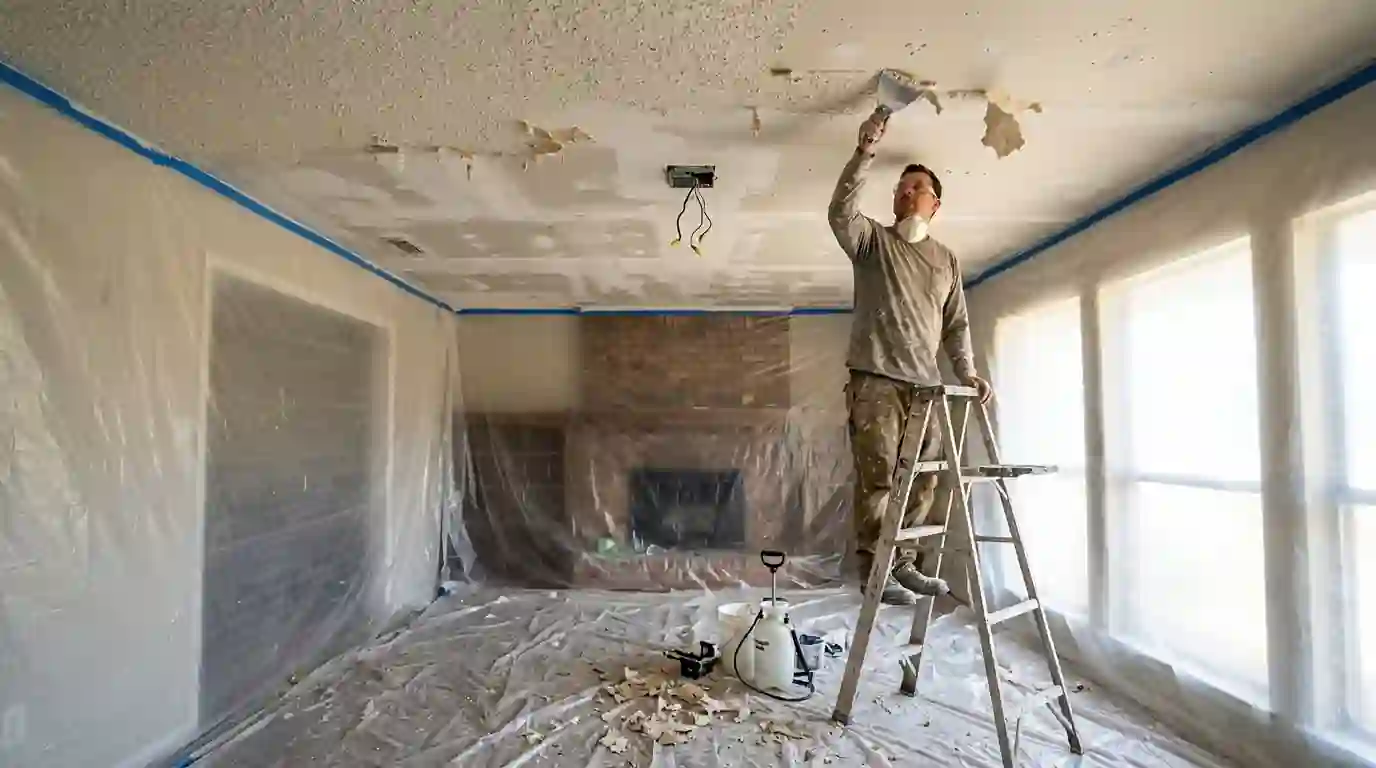
Testing comes first on any ceiling from before the mid-1980s
Many acoustic ceiling textures sprayed before the mid-1980s contained asbestos, and a ceiling that looks harmless can still have it. Scraping releases fibers into the air, so the ceiling has to be tested before anyone takes a scraper to it. That usually means a small sample taken by a qualified asbestos inspector and sent to an accredited lab, with results typically back in a few business days. Some home inspection reports already include this test result.
We don't wet, scrape, sand or drill into a popcorn ceiling until those results are back and clear. If the sample shows asbestos, the ceiling is not something we remove. It needs a specialist abatement company. Once that work is complete and the space has been cleared, we can come back to repair the drywall, texture and paint. Homes built in the 1990s and later are less likely to be a concern, but we still ask, and if in doubt, we test.
What happens to the room during removal
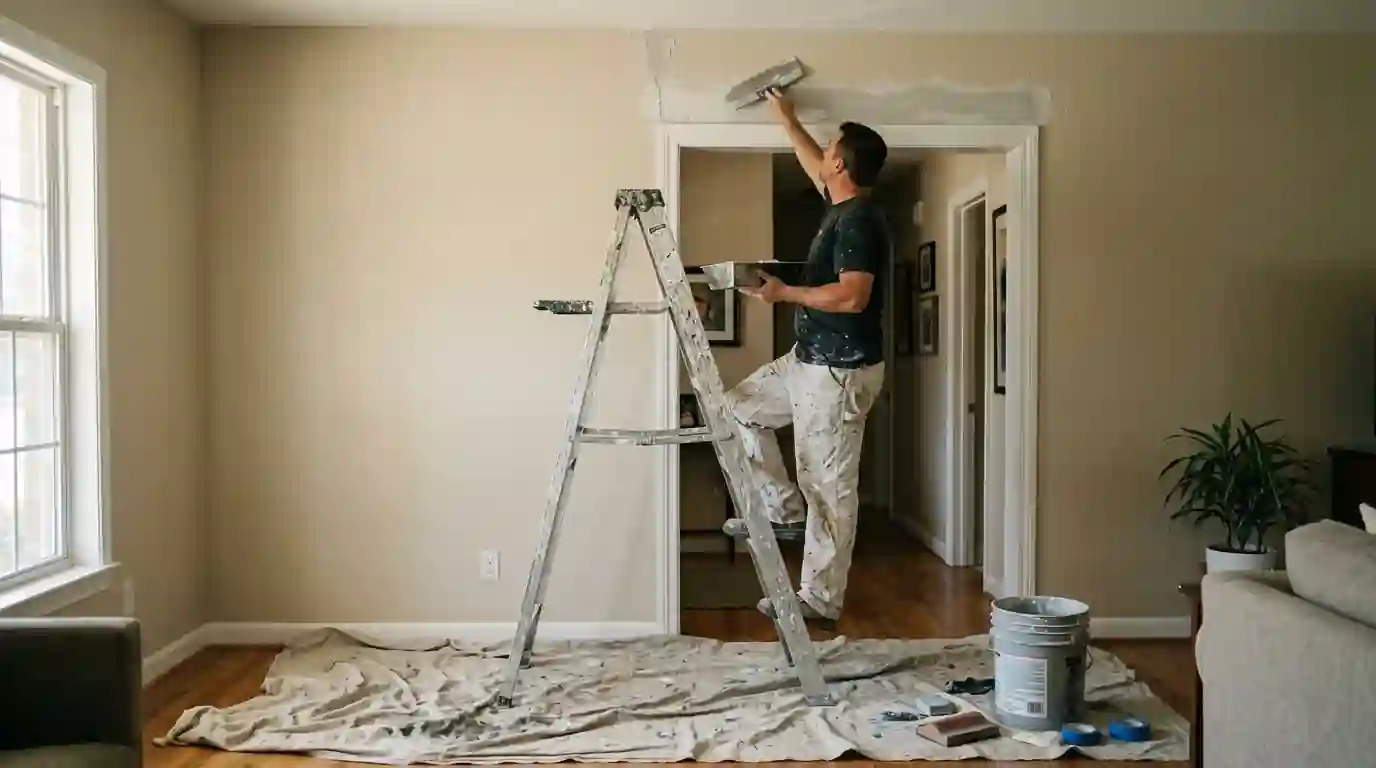
Scraping popcorn is messy. Wet texture falls in clumps and sticks to everything, so we empty the room where possible, or push furniture to the center and wrap it in plastic. Floors get plastic sheeting taped to the baseboards, topped with rosin paper for traction. Walls get plastic sheeting hung from the ceiling line down, which protects the paint and makes cleanup a matter of rolling everything up. Containment takes time, but it saves hours of cleanup.
We shut off the HVAC system and cover return vents so debris doesn't get pulled into the ductwork. Ceiling fans and light fixtures come down, with wires capped. Electrical outlets on the walls are covered, since the ceiling gets sprayed with water to soften the texture before we scrape. Smoke detectors are taken down or covered for the day, and we ask that children and pets stay out of the room until cleanup is finished. Doorways to the rest of the house get a zippered plastic barrier so dust and debris stay put.
What popcorn ceiling removal typically costs in Fort Worth
$2.35 to $4.80 per square foot
of ceiling area, including scraping, drywall repair, new texture or skim coat, primer and two coats of ceiling paint. Your price comes from a written scope after we see the job.
What moves the number
- Whether the popcorn was painted over
- Smooth Level 5 finish versus a sprayed texture
- Vaulted or two-story ceiling heights
- Drywall damage and tape seams found underneath
- Furnished rooms versus an empty house
- Lab testing fee if a sample is needed
Scraping, skimming and the finish you choose
Unpainted popcorn usually softens after a light mist of warm water and comes off with a wide scraper in long, shallow passes. Painted popcorn is harder, since the paint keeps water out. We sometimes score it or use a removal solution, and it takes noticeably longer. Either way, we try not to gouge the drywall paper, and any tears get sealed with a shellac-based or oil-based primer before mud goes on.
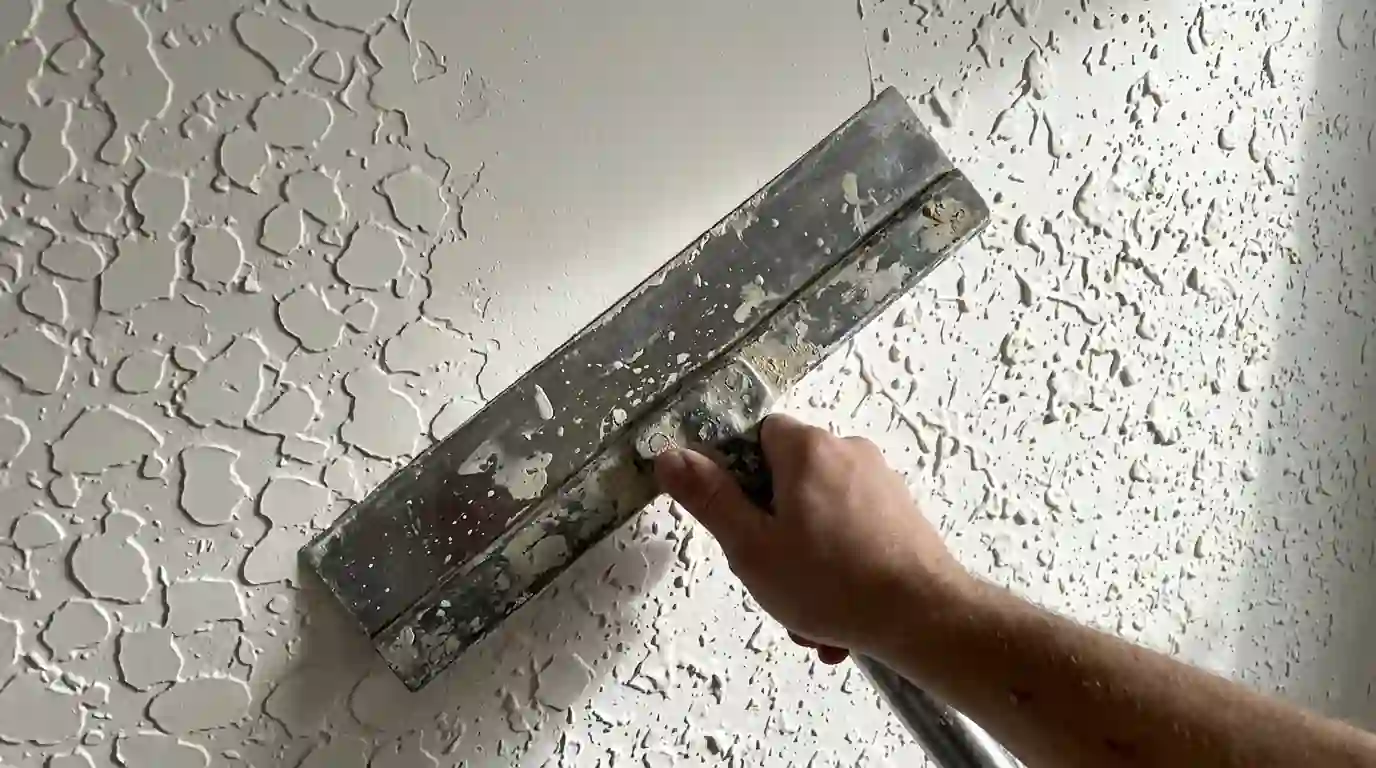
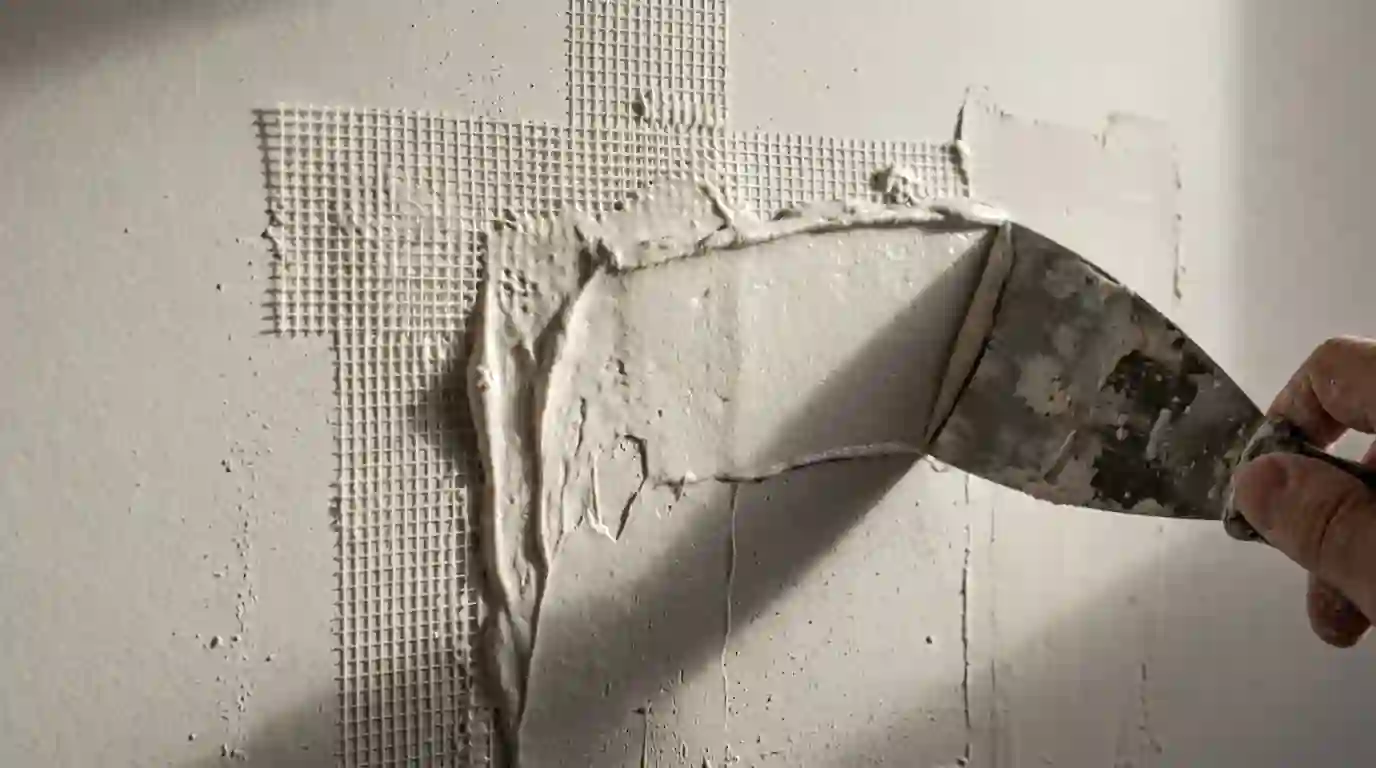
Underneath, ceilings are rarely ready for paint. Builders used popcorn partly to hide rough tape joints, so we usually re-tape loose seams and skim coat the whole surface. From there, you choose the look: a light orange peel or knockdown that hides minor flaws, or a smooth Level 5 finish that looks the most modern but takes extra coats and careful sanding. We show you a sample board of each option before you decide.
- Light knockdown: hides small flaws, most forgiving
- Orange peel: subtle, common in newer homes
- Smooth Level 5: cleanest look, highest labor
- Ceiling paint: flat finish to minimize glare and flaws
Priming and painting the new ceiling
Fresh compound absorbs paint unevenly, so every new ceiling gets a coat of drywall primer or a high-build primer. That evens out porosity and shows any remaining flaws under a work light, which we fix before the finish coats. Then two coats of flat ceiling paint go on, rolled in the direction of the main window light so roller marks don't catch the sun. Each coat dries several hours before the next.
Flat white is the usual choice because it hides imperfections and makes rooms feel taller, but ceilings don't have to be white. A tinted ceiling a few shades lighter than the wall color, or a soft warm white with a slightly creamy undertone, works well in many Fort Worth homes where afternoon sun floods the living spaces. We reinstall fixtures, peel back the plastic and clean up before we leave.
Signs it is time for popcorn ceiling removal
- Bumpy acoustic texture that sheds bits when touched or brushed
- Yellowed or stained popcorn that won't take a clean coat of paint
- Cobwebs and dust clinging in the texture that you can't clean
- Water stains on popcorn texture after a roof or plumbing leak
- Planning a remodel or sale and the ceilings date the house
- Visible tape joint lines showing through thin areas of popcorn
How we handle popcorn ceiling removal, step by step
- 1
Confirm testing status
We ask about the home's age and any past tests. On older ceilings, a sample must go to a lab first, and we schedule removal only after clear results are in hand.
- 2
Seal off the room
Floors, walls and furniture are covered in plastic, HVAC is turned off and vents sealed, and light fixtures and fans come down with wiring capped safely.
- 3
Wet and scrape
We mist the texture with water to soften it, then scrape it off with a wide blade in shallow passes, collecting the debris directly into bags as we go.
- 4
Repair and skim
Torn drywall paper gets sealed, loose tape gets replaced, and we skim the ceiling with joint compound, sanding between coats until it's ready for texture or a smooth finish.
- 5
Texture or smooth finish
We apply the finish you chose, testing sprayed patterns on scrap board first, and let the new surface dry fully before any primer is applied.
- 6
Prime, paint and reinstall
A drywall primer and two coats of flat ceiling paint go on, then fixtures and fans are reinstalled, plastic is rolled up and the room is cleaned.
Fort Worth conditions that shape popcorn ceiling removal
Many Fort Worth neighborhoods built from the 1960s through the 1980s, from Wedgwood and Candleridge to parts of Hurst, Euless and North Richland Hills, still have original popcorn ceilings, which is exactly the era when testing matters most. Newer subdivisions from the 1990s onward rarely used it. Summer heat affects the job in a practical way: with the air conditioning off during scraping, rooms warm up fast, so we start early and work room by room. Homeowners preparing to sell often remove popcorn from the main living areas first, since it's one of the first things buyers notice. If your home has a known roof leak history, fix it before removal, because stains on new drywall show far more than they did in old popcorn.
Where we offer popcorn ceiling removal around Fort Worth
Across Fort Worth (76102 and surrounding ZIP codes), including Fairmount, Ryan Place, Mistletoe Heights, Arlington Heights, Tanglewood, Westcliff and other neighborhoods, plus these nearby cities and counties:
- Arlington 76010
- Grand Prairie 75050
- North Richland Hills 76180
- Mansfield 76063
- Euless 76039
- Grapevine 76051
- Bedford 76021
- Keller 76248
- Burleson 76028
- Haltom City 76117
- Hurst 76053
- Southlake 76092
- Weatherford 76086
- Saginaw 76179
- Colleyville 76034
- Benbrook 76126
- Tarrant County 76102
- Denton County 76201
- Johnson County 76031
- Parker County 76086