Why film-forming deck coatings peel in Fort Worth
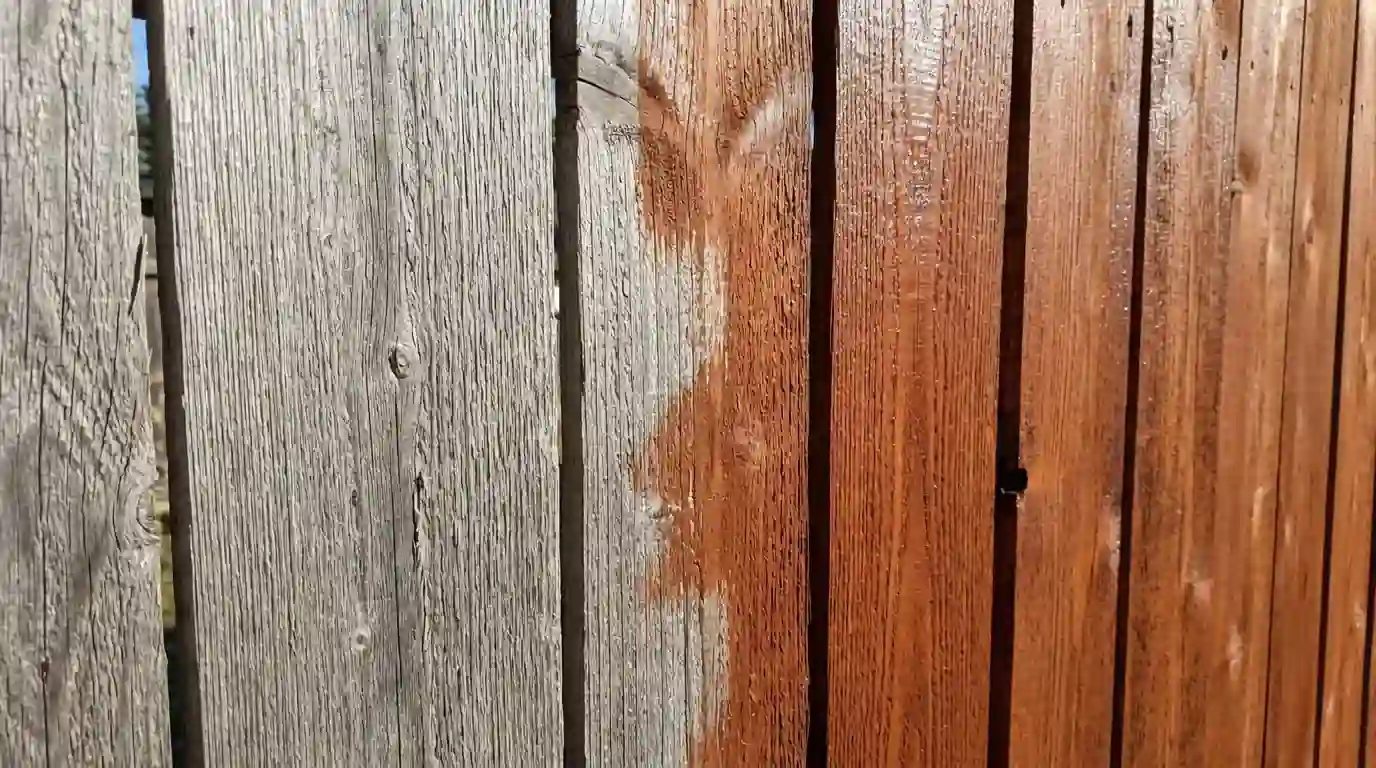
Many decks we see have a solid stain or deck paint peeling off in sheets, especially on horizontal boards in full sun. Those products build a film on top of the wood. On a deck, that film gets walked on, pounded by UV, and stressed as boards swell after rain and shrink in the heat. Water gets under the film through cracks, and the coating lifts. Once that starts, every recoat sits on a failing layer, so the peeling only gets worse.
Penetrating stains work differently. They soak into the top layer of the wood and leave little or no surface film, so there's nothing to peel. As they wear, they fade gradually and can be refreshed with a light clean and another coat. For most decks here, we recommend a penetrating oil or semi-transparent stain on walking surfaces, and keep solid colors for vertical parts like railings and skirting if you want them.
Stripping, brightening and sanding the wood
Old finishes and gray, weathered fibers have to come off before new stain can soak in. We start with a deck stripper for failing film coatings or a percarbonate cleaner for dirt, mildew and graying, applied with a pump sprayer and worked with stiff brushes. A low-pressure rinse follows, using a fan tip and keeping the wand moving. High pressure would raise furry fibers and gouge soft pine. A wood brightener with oxalic acid then restores the wood's natural color and neutralizes the stripper.
After at least two days of dry weather, we sand any raised grain or splinters with 60 to 80-grit on a floor sander or random orbital, paying extra attention to handrails, where hands slide every day. Popped nails are reset or replaced with deck screws, and any soft boards are flagged for replacement. Clean, dry, open wood is the foundation of a stain job that lasts. We also blow debris out of the gaps between boards so stain can reach the edges.
- Stripper for old film coatings, cleaner for gray wood
- Low-pressure rinse with a fan tip, no gouging
- Oxalic acid brightener to restore color
- Sanding of rails, stairs and rough board ends
What deck staining & sealing typically costs in Fort Worth
$1,150 to $3,400
typical range for a 300 to 500 sq ft wood deck with rails and stairs, not a quote. Your price comes from a written scope after we see the job.
What moves the number
- Deck square footage and number of levels
- Old solid stain or paint that must be stripped
- Railing style, balusters and built-in benches
- Sanding needed for raised grain or splinters
- Transparent, semi-transparent or solid stain choice
- Loose boards or popped fasteners to reset
Which deck stain should you choose for Texas sun?
Clear sealers protect against water but offer almost no UV protection, so the wood still grays in a summer. Transparent stains add a little pigment and some UV block, and need recoating roughly every year here. Semi-transparent stains carry more pigment, show some grain, and usually last two to three years on horizontal boards in Fort Worth sun. Solid stains look like paint and last longer on rails and fences, but on deck boards they behave like a film and can peel.
We use quality oil-based or hybrid penetrating stains from brands like Sherwin-Williams, Behr or Benjamin Moore, chosen for UV inhibitors and mildew resistance. Cedar, pine and pressure-treated pine all take stain a bit differently, so we test a board first. Darker tones block more UV but also run hotter underfoot in July, which matters if you go barefoot. We'll show you a couple of samples in the sun before we commit.
Application and dry times that fit Fort Worth weather
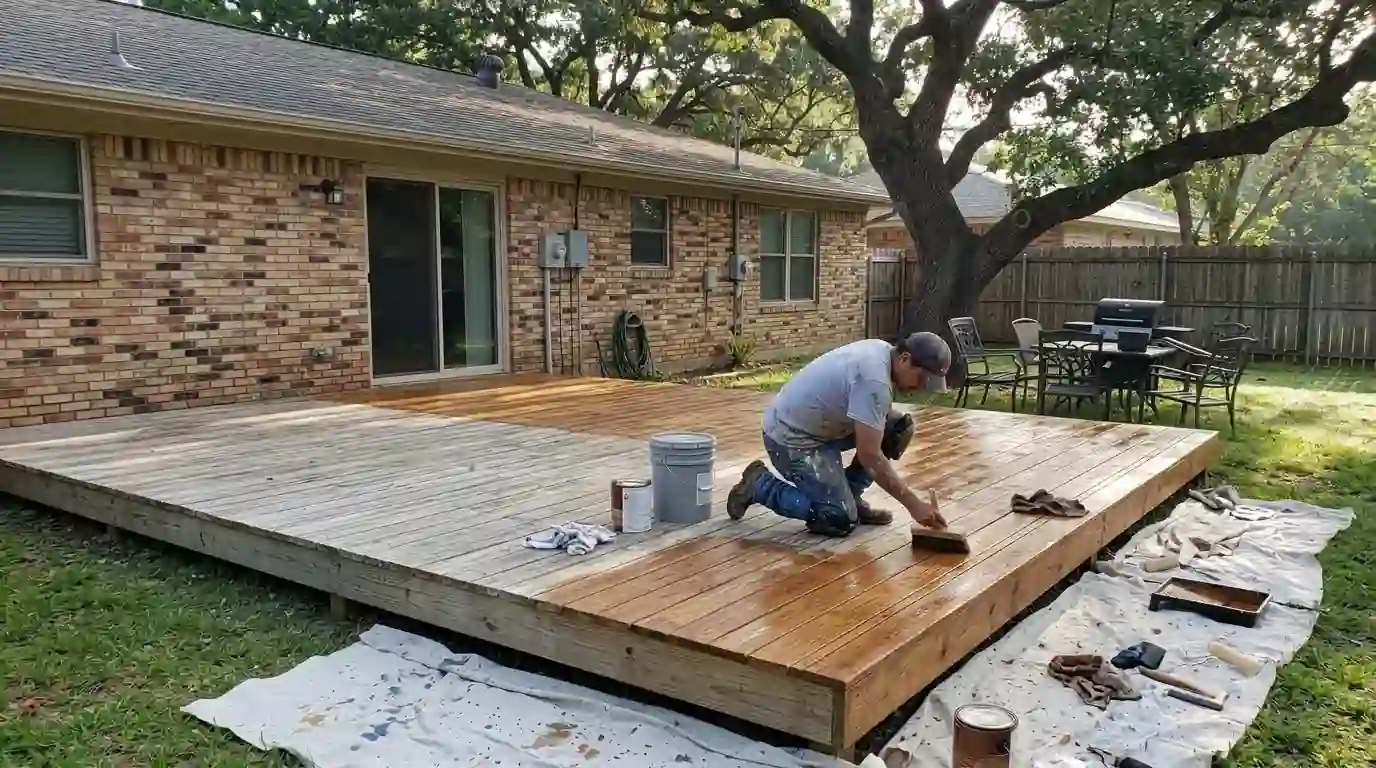
Stain goes on wood that's dry to the touch and has a moisture reading low enough for the product, usually under about 15 percent. We apply it with a pump sprayer or roller, then back-brush along the full length of each board so stain gets into end grain and gaps. We work two or three boards at a time from end to end, which prevents lap marks. Excess stain that doesn't soak in within 15 to 30 minutes is wiped off, since puddles turn sticky and attract dirt.
Ideal conditions are 50F to 90F, out of direct midday sun, with no rain forecast for at least 24 hours. Most penetrating stains are dry for light foot traffic in 4 to 12 hours and ready for furniture in about 24 to 48. In summer we stain early so the boards aren't too hot. Oily rags are spread flat or soaked in water before disposal, since oil-stained rags can self-heat.
Signs it is time for deck staining & sealing
- Deck boards have turned silver-gray and feel rough underfoot
- Old solid stain or paint is peeling off the walking surface
- Water soaks into the boards instead of beading up after rain
- Splinters catch on bare feet or along the handrail
- Black mildew spots show on shaded sections of the deck
- Nail heads are popping up as boards dry and shrink
How we handle deck staining & sealing, step by step
- 1
Inspect boards and finish
We check every board for rot and loose fasteners, test what finish is on the deck, take moisture readings, and recommend a stain type and color based on sun and wear.
- 2
Strip or clean
We apply a stripper or deck cleaner, scrub with stiff brushes and rinse at low pressure, protecting nearby plants, siding and brick from overspray and runoff.
- 3
Brighten and dry
An oxalic acid brightener restores color and neutralizes cleaners, then the deck dries for at least 48 hours, longer after rain, until moisture readings are within range.
- 4
Sand and repair
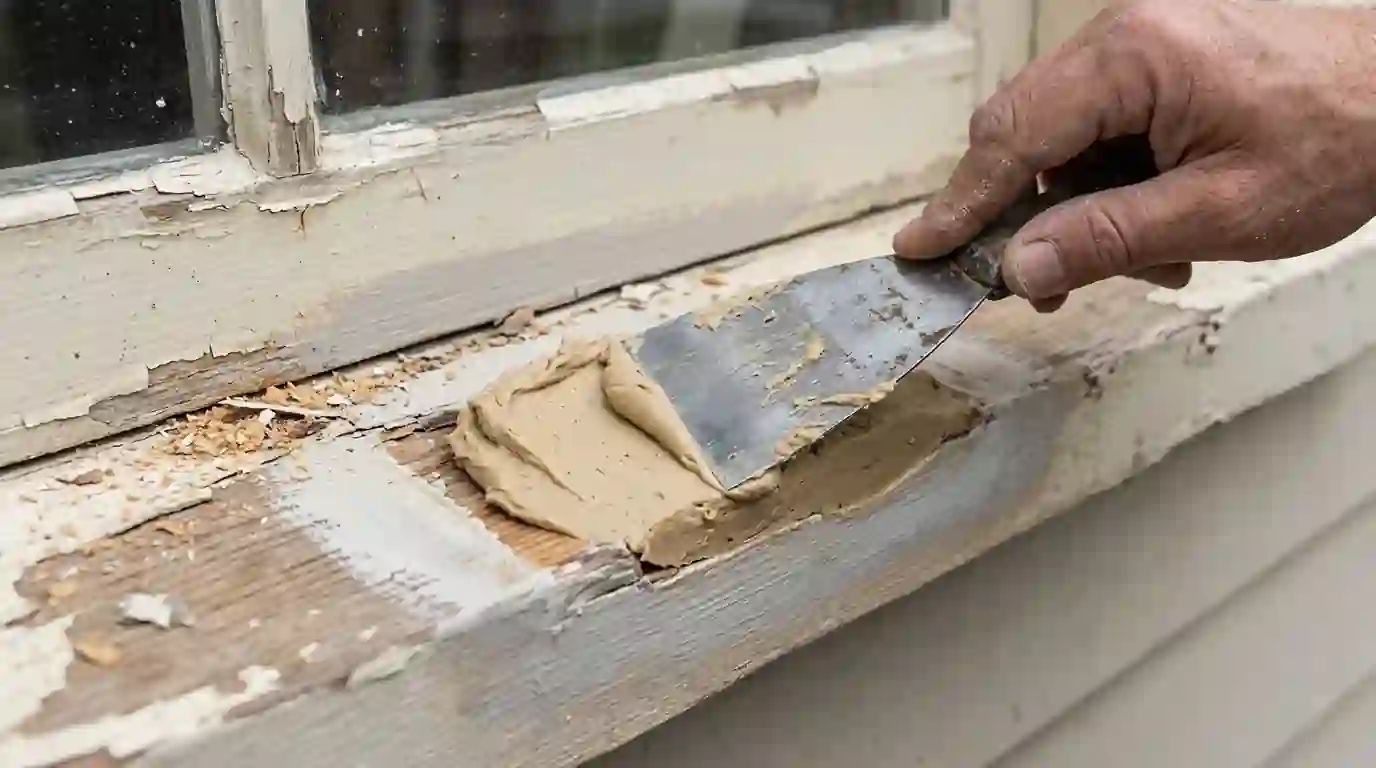
Rough boards, stair treads and rails are sanded, popped nails are reset or swapped for deck screws, and any soft boards are marked or replaced before staining.
- 5
Stain and back-brush
Stain is applied two or three boards at a time from end to end and back-brushed into the grain, with excess wiped off before it can puddle or turn tacky.
- 6
Dry and review
We keep traffic off until the stain is dry, review the deck with you, explain when furniture can return, and suggest a simple yearly cleaning routine.
Fort Worth conditions that shape deck staining & sealing
Fort Worth decks face strong afternoon sun, heavy spring rain and long dry spells, a cycle that dries out wood fast and makes it crack and gray. Many backyards in neighborhoods like Wedgwood, Candleridge and Park Glen have pressure-treated pine decks that were never sealed properly after installation. Shaded decks under big live oaks or pecans pick up mildew and leaf tannin stains, while fully exposed decks fade on the top surface within a summer or two. Expansive clay soils can shift deck footings slightly, loosening boards and popping fasteners, so we always check for movement. Spring and fall are the most comfortable times for deck work here, though early summer mornings also work well.
Where we offer deck staining & sealing around Fort Worth
Across Fort Worth (76102 and surrounding ZIP codes), including Fairmount, Ryan Place, Mistletoe Heights, Arlington Heights, Tanglewood, Westcliff and other neighborhoods, plus these nearby cities and counties:
- Arlington 76010
- Grand Prairie 75050
- North Richland Hills 76180
- Mansfield 76063
- Euless 76039
- Grapevine 76051
- Bedford 76021
- Keller 76248
- Burleson 76028
- Haltom City 76117
- Hurst 76053
- Southlake 76092
- Weatherford 76086
- Saginaw 76179
- Colleyville 76034
- Benbrook 76126
- Tarrant County 76102
- Denton County 76201
- Johnson County 76031
- Parker County 76086