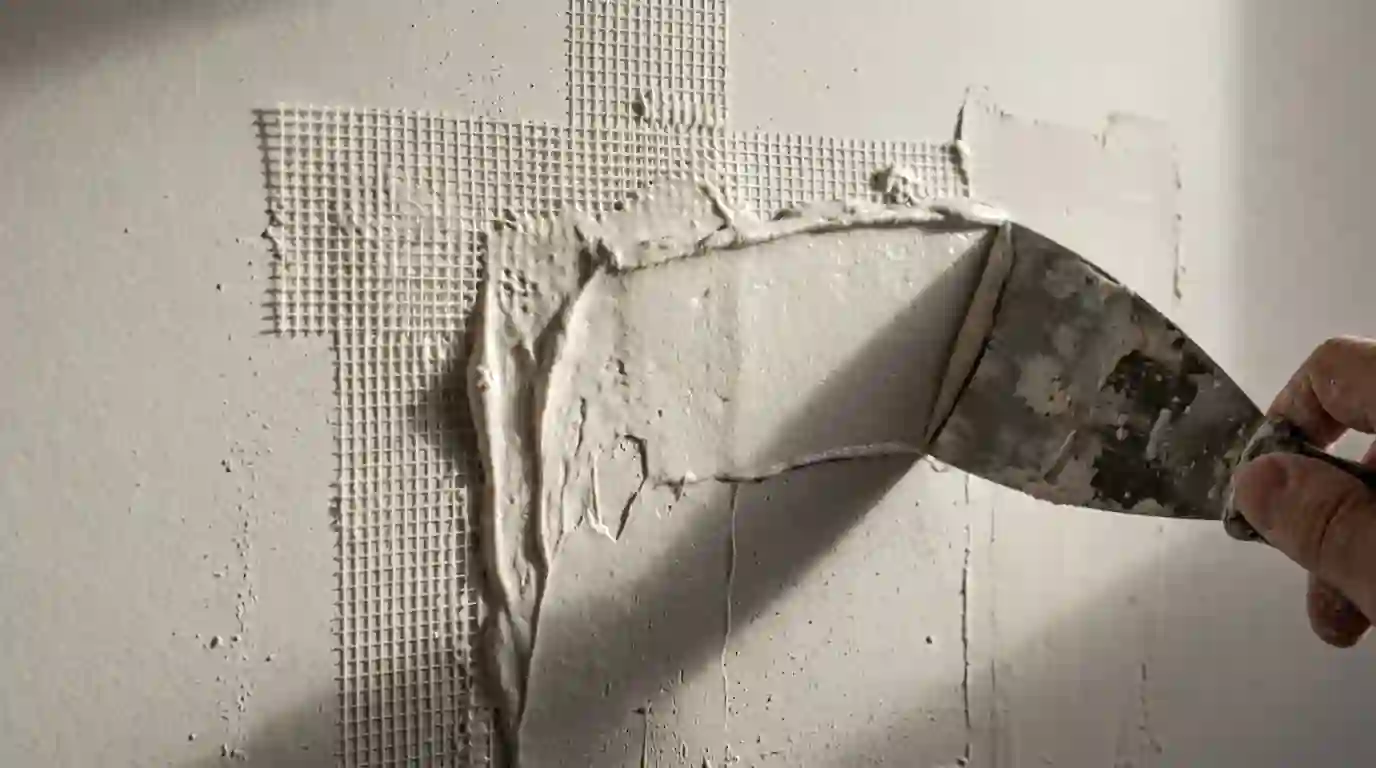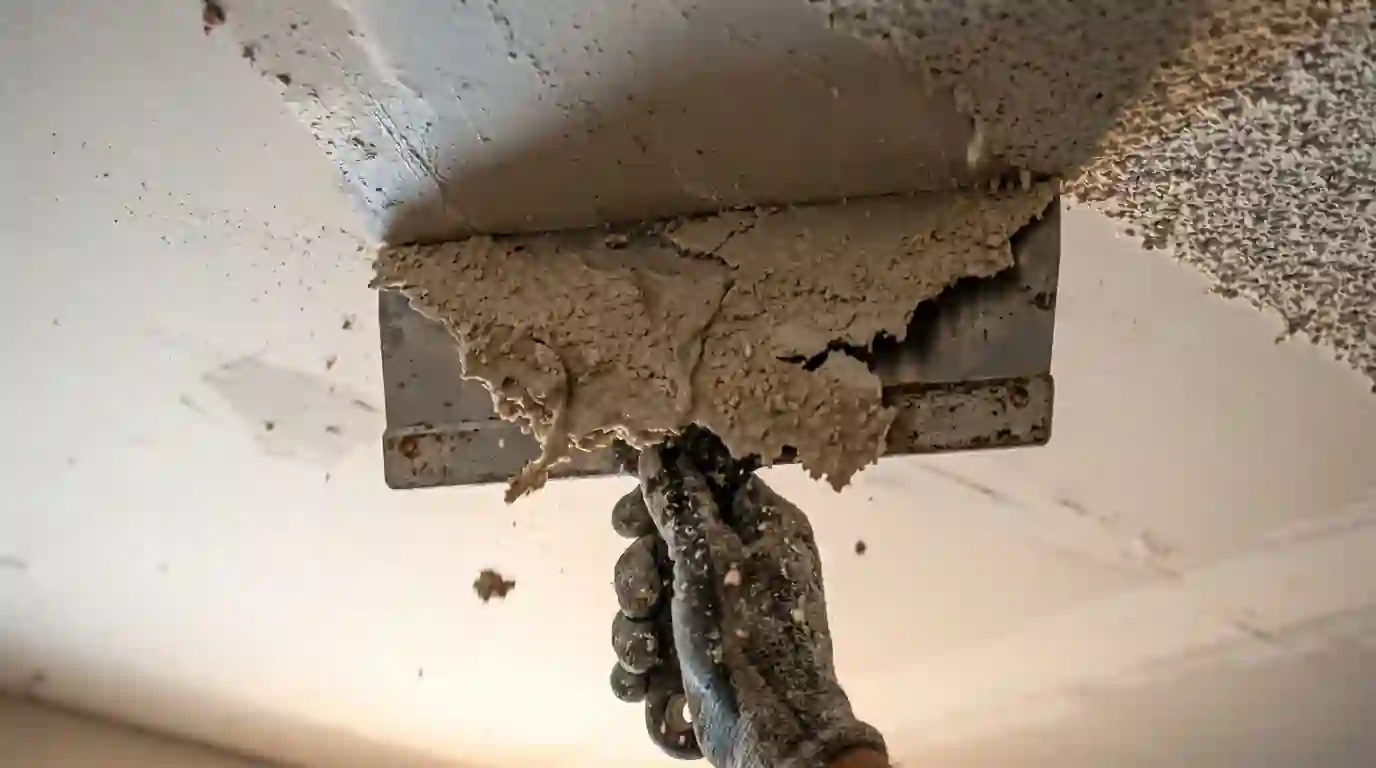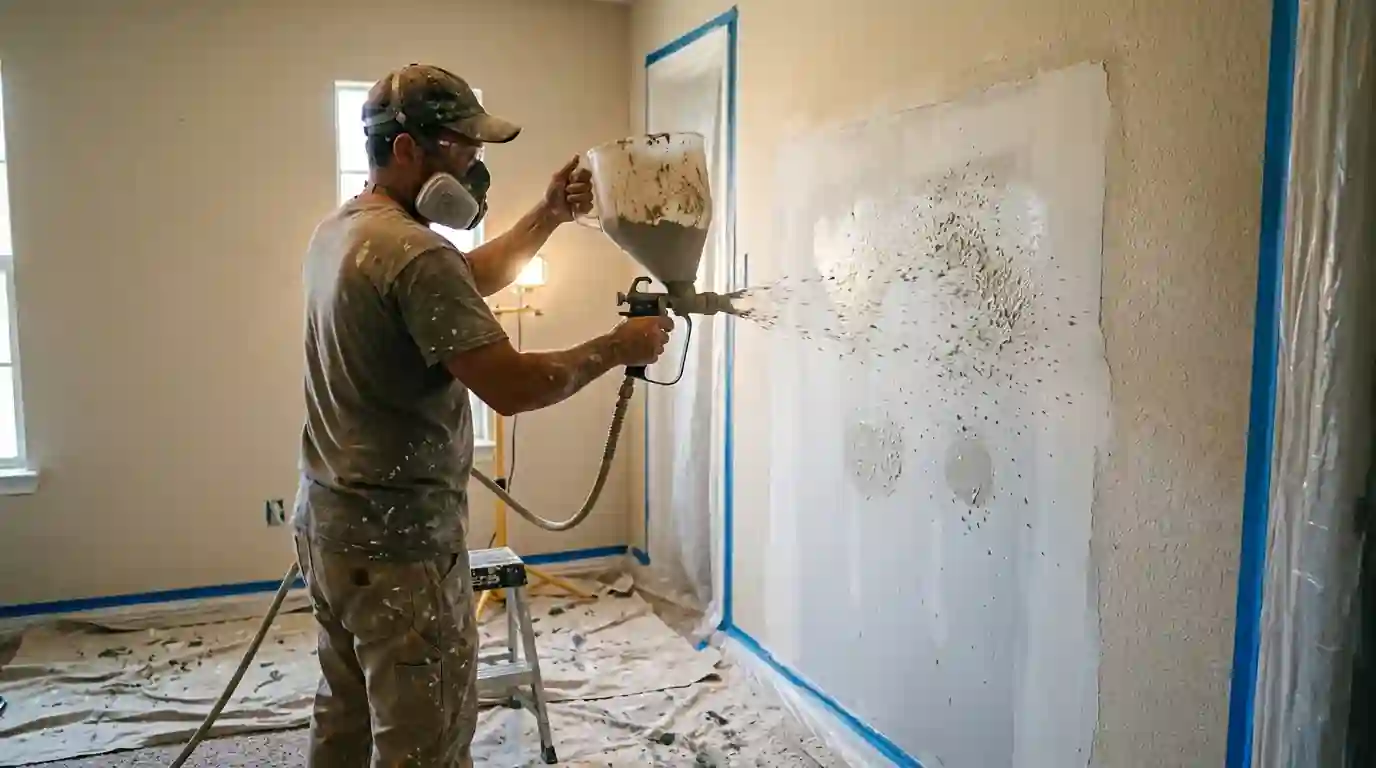
Which texture do you have? The four we see most in DFW
Orange peel looks like the skin of an orange: small, rounded bumps sprayed close together. It's the default in a lot of 1990s and 2000s tract homes. Knockdown starts as larger splatters that are flattened with a wide knife after a few minutes, leaving flat-topped islands with smooth valleys between. Skip trowel is applied by hand with a curved trowel that skips across the surface, leaving irregular, layered patches that feel more Old World and show up in many Texas homes from the 1980s onward.
Smooth walls, also called a Level 5 finish, have no texture at all. They're the hardest to repair invisibly, because every ridge and low spot shows in raking light. Older plaster homes often have a sand finish or a hand-troweled look of their own, and we treat those individually rather than forcing one of the spray patterns onto them. Some homes mix several textures from room to room, which is a clue that a previous owner or remodeler patched things over the years.
- Orange peel: fine, sprayed, light to heavy
- Knockdown: sprayed splatter, flattened with a knife
- Skip trowel: hand-applied, layered, irregular
- Smooth: skim coated and sanded flat
- Sand finish and plaster: matched by hand
Why we test on scrap board before touching your wall
Texture changes with the thickness of the mud, the nozzle size, the air pressure and how long it sits before knocking down. Changing any one of those turns a fine orange peel into a heavy one, or a soft knockdown into a sharp, lumpy one. Rather than experiment on your wall, we spray samples onto a scrap piece of drywall and hold them next to the original under the room's own light.
We adjust until the bump size, spacing and height line up, then texture the repair. For knockdown, timing is everything: we usually wait about 5 to 15 minutes, depending on humidity, until the splatter loses its wet shine, then pass a wide knockdown knife lightly across it. In a dry August attic-heated room, that window shortens fast. On humid spring days it stretches out instead. We'd rather wait an extra minute than flatten the splatter too early, because knocking down wet texture smears it into a flat, shiny smudge.
What wall texture matching typically costs in Fort Worth
$215 to $1,480
from a single patch blend up to retexturing one full room's walls, primed and painted. Your price comes from a written scope after we see the job.
What moves the number
- Square footage being textured
- Texture type, sprayed versus hand-troweled
- Walls or ceilings, and ceiling height
- Blending into existing texture versus a full wall
- Repainting the patched wall or the whole room
- Masking needed around cabinets, floors and fixtures
Blending edges so you can't tell where the patch ends
A repair rarely matches if the texture stops at the edge of the patch. We feather new texture past the repair into the surrounding wall, thinning the spray density toward the outside so old and new merge gradually. On orange peel we sometimes lightly sand the original texture near the patch so the new layer sits at the same height rather than building a raised island. Skip trowel blending is done by hand, layer by layer.
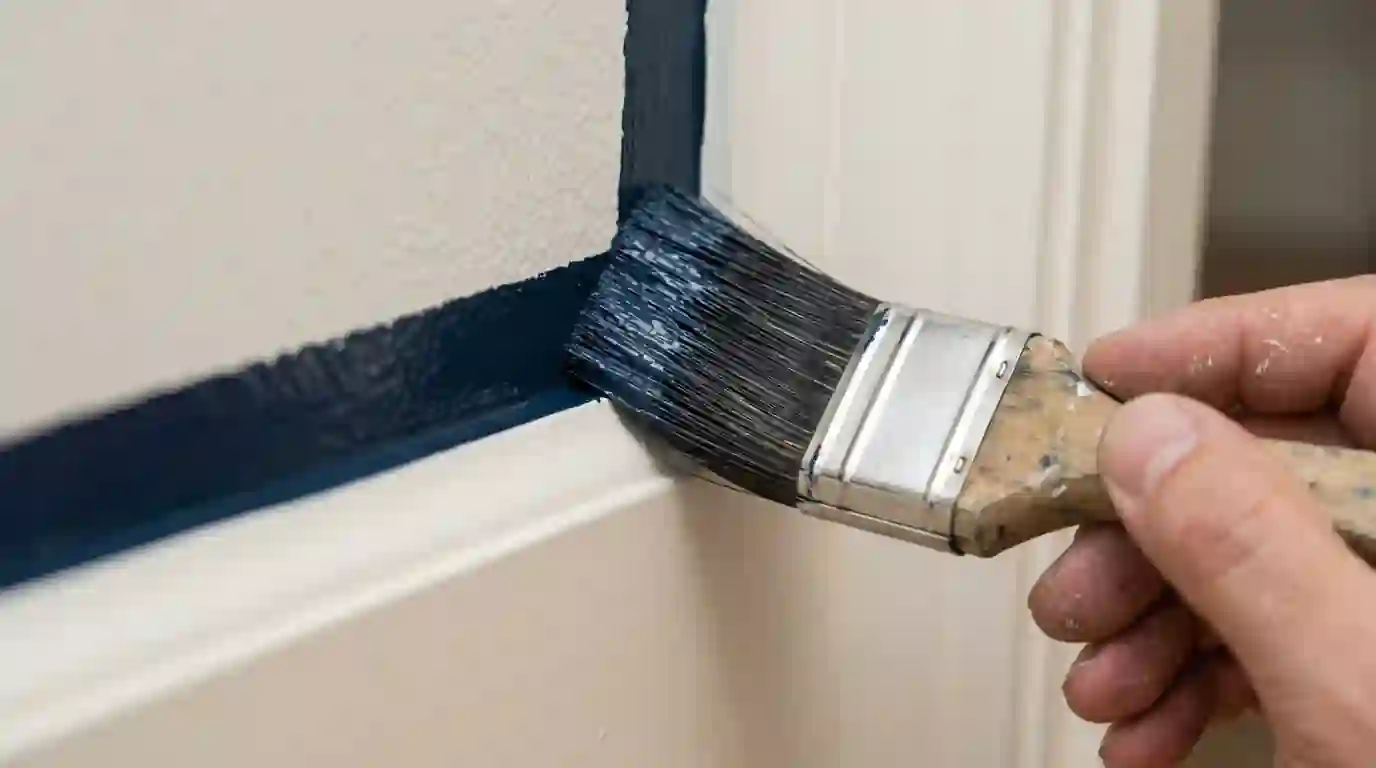
Once the texture has dried, which can take several hours or overnight in a cool room, we prime it. New compound absorbs paint far faster than painted texture does, and skipping primer leaves a dull halo even when the pattern is right. Then we paint the whole wall or ceiling plane in the original sheen. Ceilings get the full plane rolled in flat paint; walls are painted corner to corner. If the original color is unknown, we take a small chip from a hidden spot for matching.
Changing texture across a whole room
Some homeowners want to change the look rather than match it, often going from a heavy skip trowel or knockdown to a smoother finish during a remodel. Taking texture down is a bigger job than adding it. We either sand off the high points and skim coat the entire wall two or three times with lightweight compound, or, when texture is very heavy, recommend hanging new quarter-inch board over it.
Going from smooth to textured is quicker. We prime the walls so the new texture bonds evenly, spray the chosen pattern, and paint. We'll show you a sample board first so you can see the pattern in your own light before we commit a room to it. Changing texture throughout a home is best done before new flooring, cabinets or fresh trim paint go in, since spray texture and sanding dust travel. If you're planning a remodel, tell us the order of trades and we'll fit in where the mess does the least harm.
Signs it is time for wall texture matching
- A smooth square stands out on a textured wall after a drywall repair
- Patches look fine head-on but show clearly when sunlight hits the wall sideways
- Remodel left new drywall next to old knockdown that doesn't match
- Previous texture patch is heavier or lumpier than the surrounding wall
- You want to change heavy skip trowel walls to a smoother modern finish
- Ceiling repair after a leak left a flat patch in a textured ceiling
How we handle wall texture matching, step by step
- 1
Identify the pattern
We look at the wall in raking light, feel the texture and note bump size, spacing and height, and whether the original was sprayed, knocked down or hand-troweled.
- 2
Mask and protect
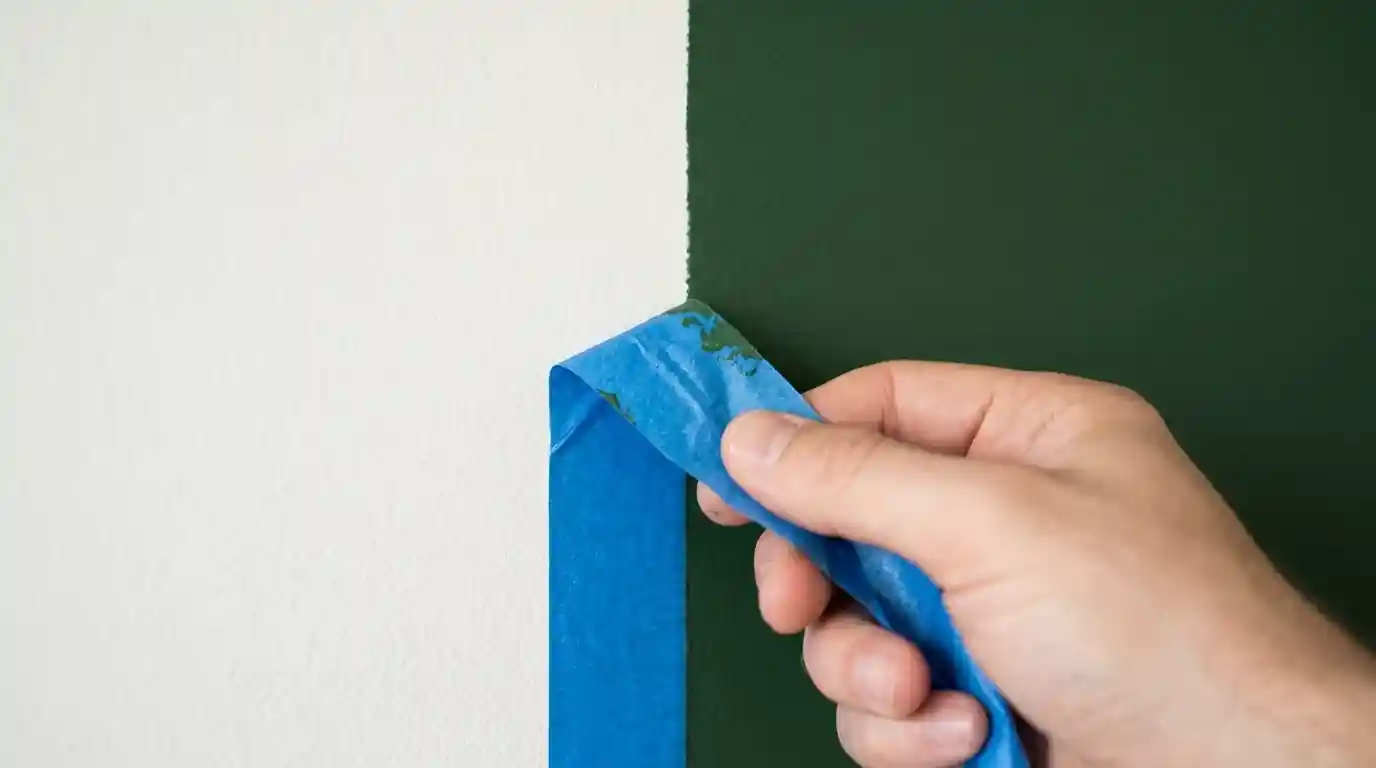
Spray texture travels, so floors, cabinets, outlets, windows and trim get covered with plastic and tape well beyond the repair before any compound is mixed.
- 3
Test on scrap board
We mix compound to the right thickness, spray samples on a spare piece of drywall, and adjust pressure and nozzle size until the pattern lines up with yours.
- 4
Apply and blend
Texture goes over the repair and feathers past its edges into the original wall, knocked down or troweled at the right time for that particular pattern.
- 5
Dry, prime and paint
After the texture dries completely, we spot prime the new compound, then paint the full wall or ceiling plane in your sheen so the color and light reflection match.
Fort Worth conditions that shape wall texture matching
Fort Worth houses show their era in their walls. The 1950s ranches in Westcliff and Wedgwood often have original plaster or early drywall with a light sand finish, and remodels there frequently leave modern board next to old plaster. Suburban homes built from the 1980s through the 2000s in Park Glen, Summerfields and the HOA neighborhoods along Loop 820 and Chisholm Trail Parkway are mostly knockdown or orange peel, with skip trowel popular in larger custom homes. Because the region's clay soils crack drywall so often, texture matching is one of the repairs we do most. Dry summer air also makes knockdown set faster, so in July and August we adjust mix thickness and work smaller sections at a time.
Where we offer wall texture matching around Fort Worth
Across Fort Worth (76102 and surrounding ZIP codes), including Fairmount, Ryan Place, Mistletoe Heights, Arlington Heights, Tanglewood, Westcliff and other neighborhoods, plus these nearby cities and counties:
- Arlington 76010
- Grand Prairie 75050
- North Richland Hills 76180
- Mansfield 76063
- Euless 76039
- Grapevine 76051
- Bedford 76021
- Keller 76248
- Burleson 76028
- Haltom City 76117
- Hurst 76053
- Southlake 76092
- Weatherford 76086
- Saginaw 76179
- Colleyville 76034
- Benbrook 76126
- Tarrant County 76102
- Denton County 76201
- Johnson County 76031
- Parker County 76086